
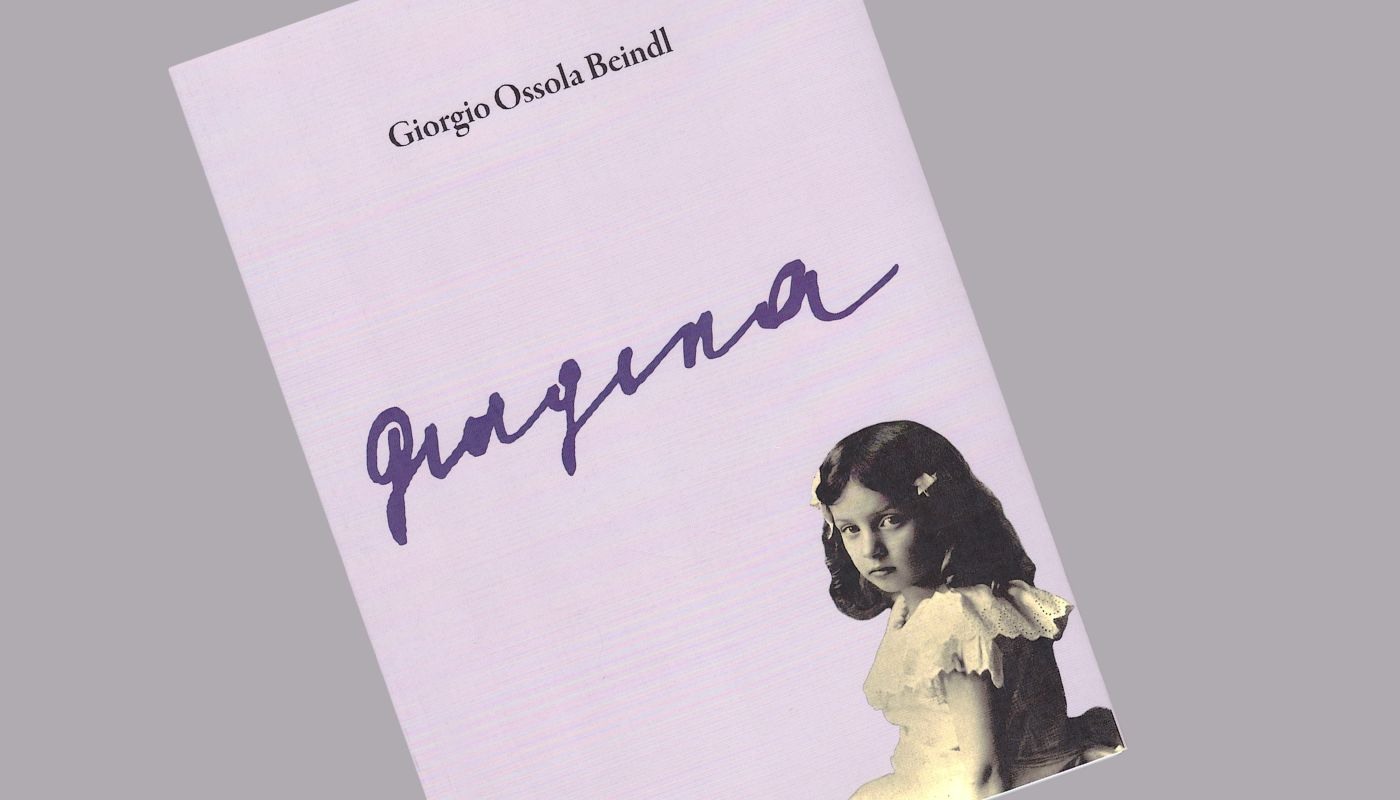
GIORGINA AND MARIA
by MARCO MENATO
Giorgio Ossola, born in 1930, a well-known bookseller and publisher from Gorizia, has the gift of storytelling, oral (perhaps also due to his ancient experience as an elementary school teacher) and also written. In recent years he has delivered to the press some volumes of memories of his Gorizia, starting with the history, social and urbanistic, of a street and its inhabitants, Ritorno in via Mazzini (LEG, 2012, new expanded edition 2020). Two small books (meaning only on the consistency side), out of print and in a very limited edition, have love in Gorizia as their sweet background: Maria (2025) and Giorgina (2026), the first dedicated to his wife, who recently passed away, and the second to his mother. In both you can appreciate the pleasant and discursive style completed by photographic sequences turned in b/w and sepia, as well as, but it is a characteristic of all LEG editions, the elegance of the graphic choices and printing.
They are two stories that intersect, but even when it seems that they are repeated, in reality the point of view always changes and therefore the sensations, the words, the images. It is the story of a child who divides his time between the school in Via Cappuccini in Gorizia, then in Trieste in the Deutsche Schule and even in Merano, and the tobacconist, precisely in Via Mazzini, formerly Via del Municipio. Absent is his father, whom he met only at a young age and almost by chance in Germany, in Duisburg (the story is very alive and I don’t want to take away the taste for discovery), he lives with his grandmother Teresa and his mother who, after pregnancy, totally loses her sight (and here too there are very beautiful pages); despite the serious impairment he will be able to carry on the business, always helped by his only son. That child, so tried from an early age, will not give up, will not complain, will not ask for subsidies or help, but on his own with stubbornness will find the way to set up his life: studies, exams, competitions brilliantly passed, finally the appointment as an elementary teacher in various schools in the Gorizia area. And then the meeting with Maria Adamo, who will become the companion of a whole laborious life, the arrival of his sons, Adriano and Federico, and grandchildren. But in all this fervor, there is the idea of building something for himself, of continuing – under another sky – the experience of the tobacconist, of daily contact with customers, of confidences and chats. It is still his mother who, unknowingly, gives him a hand. They are the books, mostly in German, which he kept on a modest shelving, it is a trunk of old books that an Austrian officer, in 1945, leaves to Giorgio, while he is on duty in the shop with the promise “Maybe I’ll come back to get them. In the meantime, you keep them!” From those books came the idea of opening a ‘workshop’ (as he used to say in a joking tone), obviously of used books: in 1964 in Via Morelli (I remember it well, there I bought my first ‘old’ books), he moved to Via Cascino, also selling furnishing accessories with his sister-in-law Valeria, then to Corte Sant’Ilario in Palazzo Lenassi (still in business under the guidance of Federico who in the meantime had expanded the range of action also in the artistic field), finally in Corso Verdi in front of the public garden, the main venue many years later of the èStoria festival conceived by Adriano Ossola, who would take the reins of the publishing house transforming it from a local publisher to a national publisher of historical field, however without forgetting its local origins.
It is the story of a long life studded with renunciations and perhaps mistakes, but also with many family satisfactions (the pages dedicated to his wife are imbued with a lot of gratitude) and professional satisfactions, interesting for example the considerations on the modern antiques market and on some winning editorial choices. A story that goes beyond personal boundaries and helps to make known to the public, not only Gorizia, what Gorizia was, the real Gorizia, divided between Italian, German (Giorgio, in fact, adds the real surname Beindl in his books, Ossola was a later choice) and Slovenian (his maternal grandmother was born in Vedrijan in Brda), a city that did not return – as they easily and mistakenly say – to the motherland but that at a certain point, in the first and even in the second war, lost everything: to the advantage of what?