Rivista – Revija št. 122
Articoli dell’edizione 122 – Febbraio 2026
WHERE TO GO
The issue of multilingualism is one of the constant hot topics in our region.
DRUGI JEZIK KOT PRVA LJUBEZEN: THE TASTE OF CHILDHOOD IN ANOTHER LANGUAGE
I am Marta Donnini, not Marta Dovòl.
I always responded like this in kindergarten, when the teachers tried to calm me down without me fully realizing it.
ŽVEČILNIGUMIJEZIK
prednikom so jezik rezali jaz svojega s trakom žvečilnim gumijem ali s tem kar dobim skupaj prilepljam ker je v kose razbit delček tu delček tam zato ga rojaki ne slišijo ne vidijo delček tu delček tam ko mi odgovorijo buongiorno na moj dober dan
ABOUT SLOVENSTICISM IN ITALY
Teachers of Slovenian at universities in Italy are extremely pleased with the initiative to write a brief summary of our Isonzo-Soča departments, as there is certainly much that is unknown to the readership and perhaps there will be some pleasant surprises among the information.
A FETISH OF LANGUAGE AND LITERATURE
Slovenian literature in Italy is created in a space where language is both an everyday tool and a symbol that binds the community. Language and literature here are never merely aesthetic phenomena.
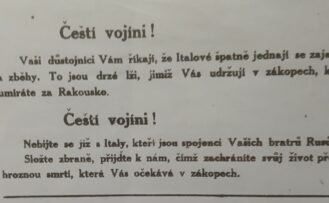
SOLDIERS, DESERT, BECAUSE IN ITALY YOU WILL HAVE EVERYTHING IN ABUNDANCE!
When talking about languages, everyone would first think that an article with "learned" explanations would touch on linguistic differences in a territory like ours in Gorizia.
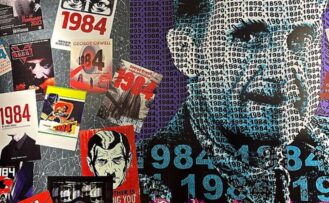
IN THE WORLD OF “DYSTOPIA” WE ARE LOSING TOUCH WITH REALITY
The conference drew inspiration from the multilingual and multinational identity of the cross-border 'twin cities' of Nova Gorica and Gorizia, and returned to the idea at the heart of the pan-European Eurozine project: translation as a means of shaping cross-border public space.
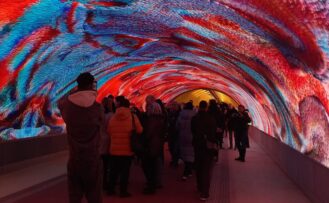
WHEN ART LOOKS BACK
There is something strangely intimate about encountering a work of art. It is that moment when we stop in front of a painting, a statue, or an installation and something moves within us.
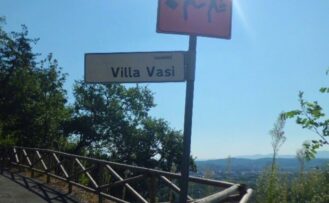
NAMES
Regarding the visible, as well as auditory, use of the Slovenian language in public, we have often said, described, outlined and praised very diverse versions of their manifestations, but their audibility and visibility are increasingly sinking into the depths of silence and blindness.
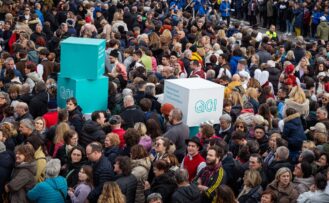
AFTER 2025: CULTURE IS DEFINED BY THE HORIZON
"Society is defined by borders, culture is defined by the horizon", with this sentence by James P. Cars (American professor of history and literature of religion) I often concluded presentations of the concept and program of the European Capital of Culture Nova Gorica - Gorica.
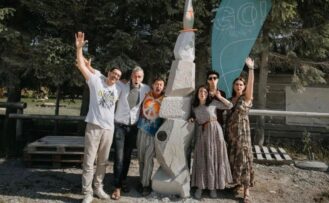
INTERNATIONAL ARTIST RESIDENCY WOOD&STONE&GLASS LOKVE 2025
In the heart of the vast Trnovski Gozd forest, at 965 meters above sea level, lies the village of Lokve - once a famous ski resort in Goriška in western Slovenia.
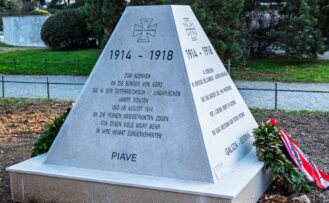
GERMAN, A FORGOTTEN LANGUAGE
There were great expectations that the various initiatives planned for 2025, the year Nova Gorica and Gorizia will be European Capitals of Culture, would contribute to spreading and further deepening knowledge of the unique cultural and historical character of both cities.
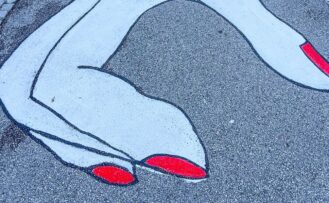
THE LANGUAGE OF ART, AVAILABLE IN PUBLIC SPACE
Visual language is a spontaneous and immediate form of communication: it allows us to convey concepts, ideas, representations, or simple messages directly.
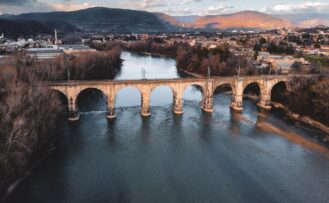
AWARENESSES
In a strip of land bordered to the north by the Natisone, to the east by the Isonzo and to the south by the sea, a social group has long lived which, although located in Italy, speaks Slovenian.
MONFALCONE AND MOTHER LANGUAGE DAY: BETWEEN HISTORICAL MEMORY AND UNFINISHED INTEGRATION
On February 21, many residents in Monfalcone will also celebrate International Mother Language Day, established by the UN to promote multilingualism and respect for mother tongues.
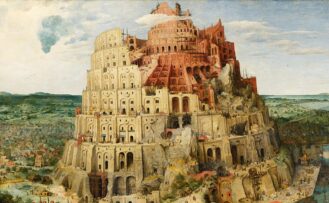
GAP THE MIND. THE DARK SIDE OF THE MOON
Using the Moon as a metaphor, if Gap the Mind is an invitation to explore (mental) space, directing the observation towards its dark side promises (also musically speaking!) a decidedly more intriguing investigation.
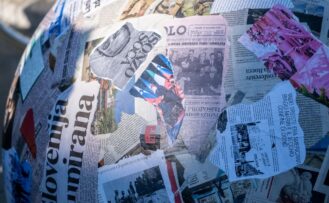
BORDERLINE PLURITUALISM IN THE ERA OF GO!2025: BETWEEN SHOWCASE AND REALITY
Since the end of the Habsburg imperial experience, in the Gorizia area, language has ceased to be a simple tool of communication: it has become and continues to be a political device, a marker of belonging, a symbolic battlefield, an open wound disguised as normality.
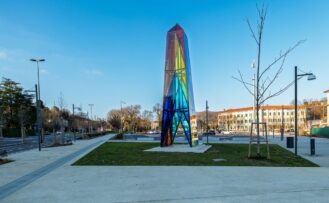
BORDERLESS IN THE RIGHT PLACE AT THE WRONG TIME
Now that it's over, a question arises: what the hell did this European Capital of Culture mean for Nova Gorica and Gorizia? I mean, what did it really mean, what profound changes did it bring about in the two communities, what processes did
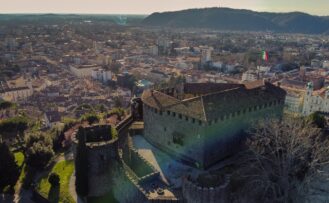
THE SAFETY OF GORIZIA MUST BECOME A REGIONAL, NATIONAL AND EUROPEAN ISSUE
During the 19th century, Gorizia became a major industrial center, connected to the port of Trieste with the major industrial investments of Piedimonte and Straccis, and the commercial center of a vast province. On the eve of the First World War, it had 30,000 inhabitants.
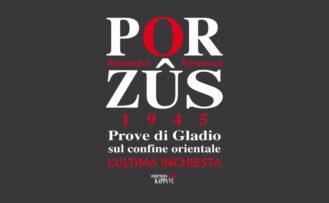
OVERT AND OCCULT BETWEEN PORZÛS AND GLADIO
That history and, consequently, historiography are a perpetually boiling magma, in which there can be no “comfort zone” guaranteed by politics, is reminded by the intense 1084 pages of Alessandra Kersevan Porzûs's book 1945-Gladio Trials on the Eastern Border, published last year by Kappa Vu.
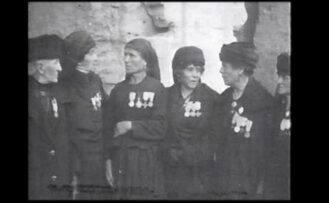
AND THE CINEMA THROW AWAY THE GUN
The end of the Great War ushered in a period of great political and social uncertainty for Italy: a victory that was “mutilated” for some, a great collective mourning suffered by the population, and different ideologies and political movements in extreme, violent opposition.
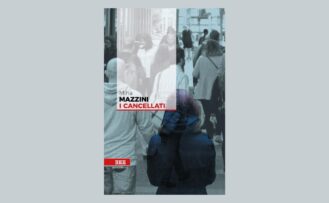
THE ERASURED IN SLOVENIA
A friend insisted I read a book that tells a dark story about Slovenia. A story unknown to me, despite it having unfolded in recent years, following the state's declaration of independence.
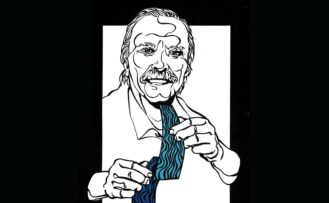
“DARIO STASI” 2023–2025, A LETTER TO A FRIEND, A BOND THAT IS RENEWED
This is still the way we address a family member or friend in a letter today. It's an affectionate and direct formula, sometimes even critical, for communicating our impressions and thoughts.
LA LENGHE E JE LA CLÂF
Pal poete, scritôr e lessicograf ocitan Frédéric Mistral, Premi Nobel pe leterature tal 1904, «qui ten la lenga, ten la clau», tant a dî che cui che al manten la lenghe – e la sô lenghe, in particolâr – al dispon di une clâf par