
GAP THE MIND. THE DARK SIDE OF THE MOON
by MARCO MARANGONE
Using the Moon as a metaphor, if Gap the Mind is an invitation to explore (mental) space, directing the observation towards its dark side promises (also musically speaking!) a decidedly more intriguing investigation.
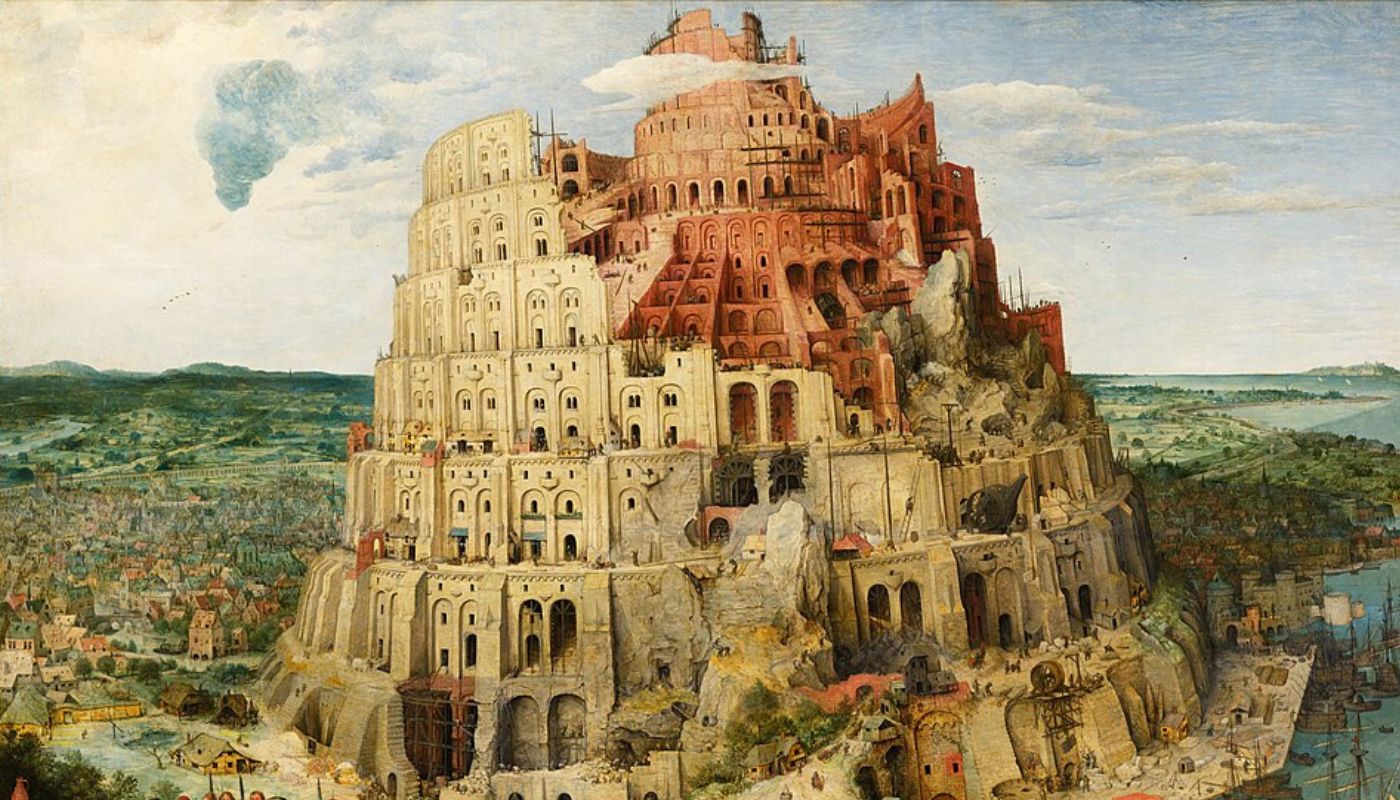
If the visible side of language is its being an organized and regulated communication code that allows the human community that shares it to recognize the relationship between the written/phonetic symbol and what it represents, its dark side is likely its connection to identity. Through languages, we communicate and simultaneously excommunicate, we dialogue and argue: they do not guarantee understanding and harmony. Yahweh, forbear (He is a notoriously spiteful God: if you never hear from me again, you know who to turn to), but the biblical multiplication of languages inflicted on humans to complicate the construction of the Tower of Babel and generate misunderstanding was entirely unnecessary; if he had attended at least one condominium meeting, he would probably have saved himself the effort. Deep identity is not a matter of registry office and historicized data; it is rooted in the emotional plane, invisible by definition, just as the root system of a tree is. The identity-building power of language is revealed in its meaning of maternal bond, emotional by definition (the mother tongue), to the same extent in which the Homeland, whose etymological root is evidently derived from the Father, increases its evocative power when combined with the Mother (the mother-homeland).
Identity is an interesting term, it derives from idem , the same, equal.
It reveals to us that identity responds to a need to belong, to “be part of.” This is because we are social animals, because in groups we help, protect, and defend one another. But these interpretations seem more appropriate to the illuminated side of the moon; certainly true, but not sufficient. So let’s go back together to rummage through the darkness.
Esperanto is an artificial language, a Frankenstein language, created in the late 19th century with the aim of fostering brotherhood and equality, to serve as a universal bridge between peoples. Its vocabulary draws on the major European languages: each is found only in a portion of them, and while its purpose was impeccable even on a practical level, Esperanto never succeeded in establishing itself, perhaps precisely because it was incapable of evoking a sufficiently intense sense of identity. Today, Esperanto is almost dead (that’s the last line, I promise). As for universalistic intent, English will fare better, driven by the hegemonic power of the United States in economics and pop culture (the dollar, marketing, Hollywood, etc.), not to mention the extent of the former colonies of the British Empire scattered across the globe. Let’s now turn our attention to another aspect of identity: the fact that it is, by definition, exclusive and not inclusive. If we were all from Gorizia (or Novogoricans, or Friulians, or Slovenians), this category would no longer have any identity-building effect, just as our sense of being simply human clearly doesn’t. Identity implies a separation from those who belong to a group characterized by characteristics (ethnic, religious, ideological, linguistic) different from one’s own. One area that supports this interpretative reading is football. It is divisive par excellence, as it constitutes one of the few remaining unifiers capable of providing an emotionally powerful sense of identity: the colors, flags, and symbols that only a few centuries ago marked your belonging to a city or county (periodically against all others) are now found only in the stands of stadiums. The Palio of Siena ignites the same violent passions: there too, symbols, flags, belonging (and brawls). But while in the latter case, the relative birth rate of a particular city district (Contrada) justifies a natural bond, in football you can be a Juventus fan without having any connection to the city of Turin. Identity belonging can therefore be artificial (no one is born a Juventus fan, and it’s not necessary to have a father who is a fan to become one as a teenager or adult), but to be emotionally effective, it must separate, not unite, as Esperanto intended. Studies have shown that football passion for a particular club doesn’t change over time; one remains loyal to it for life. The violence with which some fans emphasize their football faith (!) highlights the existential need to affirm and defend what is likely their only identity. As a youth, I played soccer, and for many years I followed my hometown team (Udine) with intense interest, mostly on television. I observed how anger and frustration were inevitable feelings following a negative match outcome: if the team defines my identity, when it loses, I too become a loser. And this, on a psycho-emotional level, is unbearable. But throughout history, much more than football, it was language that defined an identity: the “German-speaking minorities in the Sudetenland” and the “Russian-speaking minorities in the Donbass” were the straw on which the spark of nationalism was placed, which ignited the fire of war.
Ideologies and religions act as giant umbrellas of identity, and this is where their success lies. Therefore, deriving your identity from belonging to some category and defining yourself through it always brings with it comparative and competitive dynamics. The fragility of this contraption lies in the inevitable need for defense that follows, easily seen in the friction you feel when you receive criticism or your opinion is not shared: to what is perceived as an attack on one’s ego, one reacts by raising the drawbridge and loading the crossbows. At the root of frustration and anger is always fear.
The problem of identity becomes such (a problem, in fact) to the extent that a sufficiently convincing and reassuring answer to the question “Who am I?” is required from outside of us.
Ramana Maharshi, a twentieth-century Indian spiritual master, encouraged us to ask ourselves this question repeatedly, over and over again, until we were exhausted. Conventional and descriptive answers (age, gender, social or professional role, educational qualifications, interests, character or physical characteristics, belonging to a certain group or faith, etc.) were not enough; we had to persist. This exercise, still valid and practiced today, acts like the formally paradoxical Zen questions, leading to the surrender of the mental structures of rational control, and the answer, the only true one, sometimes emerges: you are a reflection of the unique and indivisible existence. Identity manifests itself for what it is: an unnecessary illusion. Identification (with thoughts and emotions) is, according to Buddhism, one of the main causes of human suffering, and if you notice any similarities between identity and identification know that it is not a coincidence.
Only in mental space and silence do you find freedom from yourself and your (more or less) divisive beliefs.
At that point you can simultaneously and serenely feel like (for example) Straccis, from Gorizia, from Friuli, from Italy, from Europe and from a citizen of the world because you no longer depend on these labels, you are free, they no longer have power over you.
Even though I live in Monaco, clothes no longer make the man.
I promised the Esperanto joke would be the last one. Well, yes, I lied. Gap your mind!