
THE STRANGE CASE OF GABRIA’S TREASURE
by ANDREJ DROSGHIG
Archival papers preserve stories full of life, the lives of people, of communities, of which every other memory has been lost – a vitality far from those closed and inaccessible places that are, sometimes, archives. This is not true, fortunately, for the Torre and Tasso Fund in the State Archives of Trieste, which the archive staff, first and foremost the former archival superintendent of Friuli Venezia Giulia Dr. Pierpaolo Dorsi, has also equipped with an excellent inventory from which even the most occasional “pastimer” can stock up on many curiosities, choosing them from the comfort of his home. How can we not be attracted, for example, by this inventory item: “Envelope 199.1 – Fiefdoms. Duino. Trials and sentences. 1472-1780, 7. About a treasure in Gabria. 1560”?
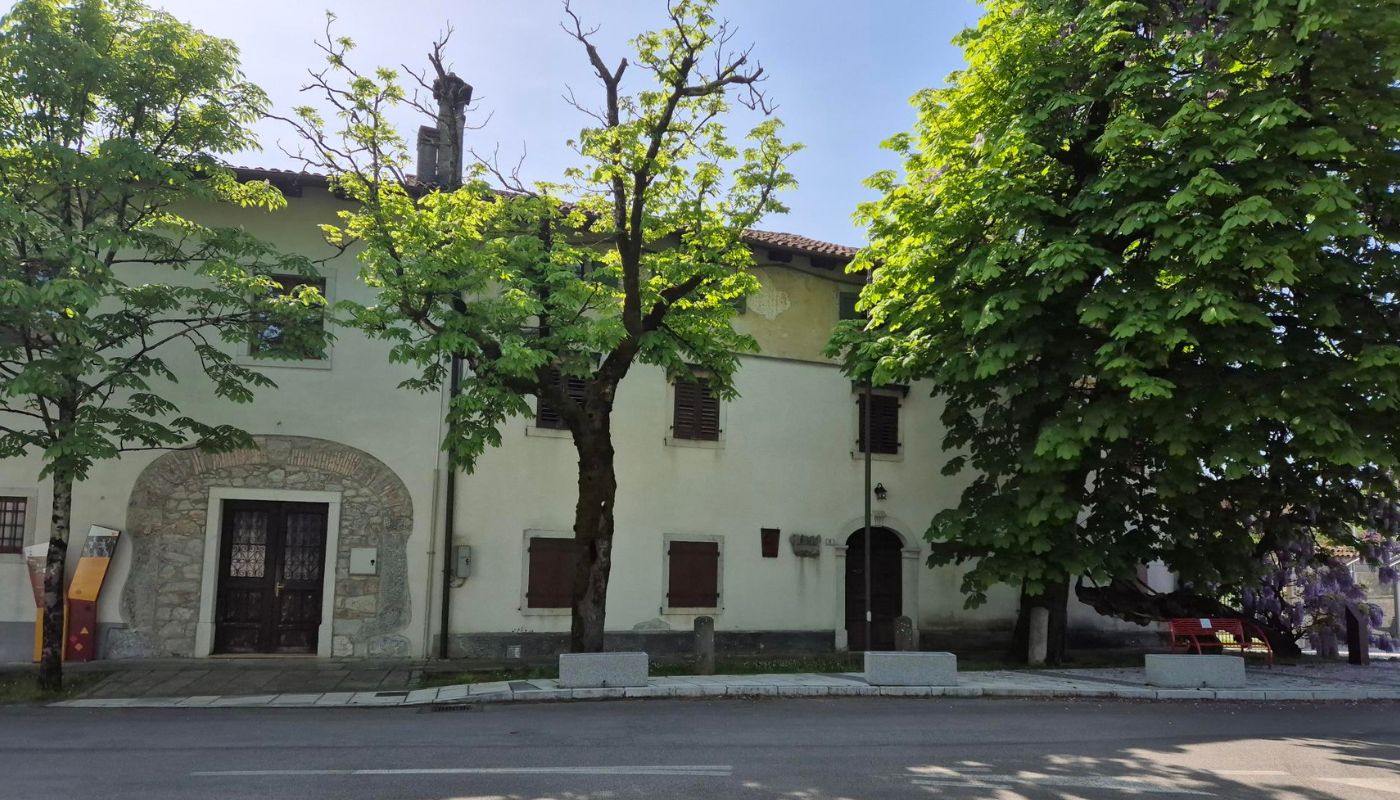
Gabria / Gabrje is a small hamlet of Savogna d’Isonzo / Sovodnje ob Soči, squeezed between the Vipava and the Karst, at the mouth of the Vallone, the main connection between Gorizia and Trieste. It is divided between an upper part (Gornje Gabrje), and a lower part (Spodnje Gabrje); here, on a small hill, there is the church of St. Nicholas, dating back at least to the Middle Ages, which has been a parish church since the nineteenth century. Near this church our history unfolds.
The town was part of the Lordship of Duino. In 1560 the lord of Duino, and therefore of Gabria, was the famous Mathias Hofer (1518-1587); this is why we find the trial in the Archive of the Della Torre and Tasso, the family that later inherited the Signoria and held it for centuries. Gabria was then a border place between the Duchy of Carniola (Kranjska), to which it belonged together with Duino, and the County of Gorizia; the Venetian State was also not far away. For this position it was the seat of muda (a kind of customs) and therefore of a certain movement; this gave the center a relatively more “urban” air, allowing the activity of some craftsman: such as Mathia callegaro (or cerdone, or schuoster), that is, shoemaker, whom we will meet in this story.
At that time, the memory of the Turkish raids was almost certainly still alive – terrible for example that of 1499, which is estimated to have depopulated over half of the farms throughout the Vipava valley – and of the bloody wars of the early 1500s between the archdukes (Austria) and Venice. Among the stories that were told in Gabria and its surroundings in 1560 there was perhaps also that of a treasure, which someone had tried to entrust to the land in a moment of danger, without ever recovering it. These treasures, however, were a prerogative of which the authorities were jealous; and when, one night, someone dug a hole and certain rumors circulated, a trial was instituted.
On Tuesday, September 24, 1560, the Count’s chancellor Mathias Hofer ordered an investigation “on some who had found money and had taken it away” (Latin); the first to present himself at the castle of Duino for questioning was Gregorius Tomisiz de Gabria. The testimonies are given in a very “Venetian” Italian, while legal formulas and questions are almost always in Latin.
“Being this estade to beat grossame (perhaps referring to the materials used for the roofing of the houses, ed.) in Savogna the of Gregor Tomisiz (probably a relative of the same name, ed.) heard said witness that there had been money in Gabria near the church of this Villa (…), and when you return (returned, ed.) to Gabria, he heard this same from all in the villa company. (in the village, ed.)”. In particular, Anderle Bobech and Gregor Calligar de Rubia confirmed to him that they had seen a busa hoe in that place. Tomisiz says he saw this hole himself as it was located “next to his mede” (his haystacks, ed.). The excavation had taken place on Saturday (Saturday, ed.) before the vizilia de Sant’Ermachora (which falls on July 12, ed.).
Obviously, the officials wanted to know who, in his opinion, had dug that hole. Tomisiz says that he learned from the people already mentioned that the diggers had been “Mathia Calligar, Micheu et Miclau Urbanichi fratelli de Rubia, Batta Curticichg de Selza et il prete Scroch di S.to Piero appresso Goritia, et un gorchiz de vertoiba, et gregorio fiol del cossa di gabria”. He also added that he had understood that money had actually been found, “and who said a zumella, and who said that they had taken away a chest”.
At this point a new element peeps out in the story. In fact, the investigators ask Gregorius if he was aware of the causes of the death of Mathiae Cerdonis (=calligar=schuoster), and summarize his answer with a sentence in Latin: Gregorius says he does not know the cause of the shoemaker’s death, in the village, however, he had heard that on the night they dug the hole, he had been “eiectus”, expelled from the hole. The discovery of the treasure and the death of the shoemaker therefore seem to be related.
This feeling becomes stronger when reading the deposition of Margeta, relicta (widow) of the shoemaker Mathia with whom she lived near the church. The widow was questioned the same day, again in Duino.
“On the Sabbath before the feast of S. hermacora prox pasado Micheu Urbanichg de Rubia comes looking for at three o’clock de night at his house, and begin (he began, ed.) knock on the door, and call said margetta, which you ask who he was, and what he wanted”. It was Micheu Urbanichg who was looking for her husband, and she woke him up; then the latter “got up (got up, ed.) from the bed and went out, and talk to him (Urbanichg), and returned to the house if dressed, and then he removed the key of the giesa (the church), and ussite, and you will lock the door outside, telling me to stay asleep, until he returned”. While the digging of the hole was taking place, Margeta says, she had to remain locked inside “nor could I understand where he had gone”.
Instead, she was a witness to her husband’s strange illness, that that night “(…) you return home about three hours before day, and sleep (slept, ed.) until midday, but on the following day the people, who went up and down from there, said that that busa had been made, and money had been gleaned (…) from that day my husband comenzete amalarse and went to the house, and zo for the schalla (ladder, ed.) cussi amalado, and D.nega (Sunday) pasada are four weeks that he is dead”. Margeta then says that she never heard of this money from her husband. Margeta reports that she asked Miclau Urbanichg about this hole, telling him that according to her her husband Mathia had died for the excavation; Miclau had replied, however, that the shoemaker “had not been where they were going, but only that he had remained at his schalla (the staircase of the house probably, ed.)”.
During Mathia’s illness “said Miclau came several times to her said husband, qnd (when, ed) he was sick to talk to them, and every time he spoke to them, they made Margetta go out.” In short, Margeta was kept in the dark about everything, but evidently she tried to investigate on her own initiative, talking to other people, whom she quotes as follows: “Anderle Bobech, with whom she believes (Margeta, ed.) that they were two of her flowers, told him, that on that night they saw (saw, ed.) to quarry that busa, and that you know (recognized, ed.) Michel Urbanichg, because you talk to luj, and the others cannot know you, because they did not speak”.
Perhaps contradicting herself, Margeta admits that she had heard her husband say that on that night he, secretly, had seen those people digging; the activities had ceased because they were disturbed by the sound of the bells of the church of Peez (Peci – Peč), beyond the Vipava (perhaps it was now dawn). She concludes by saying that some have spread the false rumor about the presence of her husband at the excavation. At this point the suspicion of the investigators transpires that Margeta knows more than she says; they warn her to tell the truth, and ask her if the money had been brought to her house. To her knowledge, she said no, and that she knew that this money was being talked about, of which, however, she had not seen or knew anything. Margeta was asked for the third time if she was telling the truth, and if she knew the rumors about the excavation of this hole. Margeta said that she heard around that they had been “Michlau et Micheu Urbanichi fres (brothers, ed.), et gregorius filius marcj Cuglich de Gabria, qui (ut dicitur) inspiciebat in cristallo (which was said to peer into the crystal, ed.), Baptta de Selza, et et quidam presbiter (a certain priest, ed.) habitans in Territorio montisfalconi (Monfalcone, ed.).
The reference to the crystal is interesting: is it some magical practice? Was it a “service” for which a certain Cuglich was famous, or did it take place only during this search for the treasure? It is difficult to answer: probably the accusations against Cuglich were considered unfounded, because there is no longer any trace of him among the people to be summoned for further interrogations.
The last question for Margeta is whether any crates had been transported to her home, or from her home to “alien territory” (probably out of jurisdiction, ed.). Margeta replied no, she only mentioned a crate present “in canipa (cellar, closet) ecclesiae gabriae prope domum sua (of the church of Gabria near her house, ed.)” containing peciamenta (perhaps patches, clothes? Leather elements?, ed.) and frumentum (wheat, ed.). Exhorted for the last time to tell the truth, she reiterated that she knew nothing else.
It is interesting to note that most of the characters mentioned (especially those appointed by the widow Margeta) are not summoned for subsequent interrogations – perhaps the documents relating to them have not been preserved. Probably Gregorius Tomisiz was considered more credible of the two. Some of the characters to be interrogated came from other jurisdictions, so the officials had to send requests signed by Count Mathias Hofer to the other local authorities. A letter was then written to the captain of Monfalcone, Potti (or Portis?, ed.), asking for the priest of Ronchis (Ronchi, ed.) and Gio Batta Curtichigh de Selza (Selz, ed.), Venetian subjects, to appear in Gorizia, to obtain the priest Franc.co Chroco de San Piero (today’s Šempeter pri Gorici) and to Andrea Chelbel (also from Gorizia) for the Gorizia subject identified as the youngest son of the Gorcig d. Vertoiba de Soto. The appointment for all was set for the following Monday.
Of all those mentioned, the only one whose testimony has been preserved (perhaps because he was the only one to appear) was the Venetian subject Gio Batta Curtichigh di Selz, who had to be solicited on 1 October with the threat – in case of absence – that he would be prosecuted with the “prauda” (i.e., probably trying him in absentia, ed.). This is the only point in the whole file in which the Slovene language appears, the majority among the population, and in fact very present in the names of places and people.
On 19 October 1560, therefore, at the Castle of Duino in the “salla magna versus Mare” the interrogation of Gio Batta Curtichigh da Selz took place, in the presence of the flegaro (captain) of Duino Martino Bogarino. Curtichigh says he left Selz for Gorizia to accompany the doctor “M.ro (maistro, ed.) Antonio Romano, qual hora stantia in Monfalcon, (…) for some of our particular negocij (business, ed.)”. Once in Rubbia (Rubije), they decided to spend the night there staying with Miclau Simonichg. “Dining with him Miclau (…) there at the tolla (at the table) there was talk of a certain treasure, which Mathia calligaro de Gabria had said was in a certain place in the said villa of Gabria above the giesia (the church, ed.), since this was spoken of for a while, he said (after it had been talked about for a while, I said, ed.), that it would be well to go and see, if there were something, and it was said that it would be good to go and see something, and it would be enough for me to have the experience”.
What did this experience consist of? Taking a hoe, the doctor, Gio Batta Curtichigh and Miclau Simonichg who hosted them went to the point of the alleged treasure where (…) he was trained with the hoe to make a busa on the ground, and then the said doctor to make a circle of bulletin boards, and some signs above the said busa, to find such a treasure, but however nothing was seen or found, except for two piere de sasso, which Your Excellency knows (…)”. Excluding that the “sticks” were used to secure the edge of the hole, they would rather suggest some practice similar to the search for water that dowsers do. However, according to Curtichigh, the villagers heard the noises, arrived, and disturbed them, and then the three stopped digging; Someone else swears, “Per li santi de Vanzeli”, that he does not know.
On December 27, 1560, the sentence was issued, in the presence of the Phlegaro (captain) Bogarino, the suppano (mayor) of Prosecho and those of other villages of the lordship of Duino. In Latin, it would seem to understand that for having sought this treasure without a license, the accused were fined with 32 marks, probably to be collected by the aforementioned suppani.
Nothing else is known about this treasure and we do not even know if it was really not found – as probably the investigators never did. The “voyeur” of the twenty-first century is struck by the magical imagery of these “grandparents” of ours; and he leaves the ancient papers with the impression that these beliefs, a source of hope and even anguish for them, were a fundamental tool for managing lives with much less security than ours.
For information on the archives of Torre and Tasso, consult the excellent material on the website of the State Archives of Trieste https://archiviodistatotrieste.it/ which my thanks go; as for the church of Gabria / Gabrje, see G.Tavian, Gabria. A jewel to be discovered, Voce Isontina, 27 May 2017.