
WHEN MISSING BECOMES LOVE
by KATJA CANAJ
“To care is to take care of what the other lacks. Here we can reflect on one of the most insightful formulas Lacan gave to define love. Love is supposed to mean giving to the other what we do not have ourselves. To love is to give what you do not have. (…) To give missing in love means just that: to make us feel that the presence of the other is what makes me miss him. When we say “I love you”, we are telling someone else that our life without this love is a life that lacks something, and that this love causes missing. The greatest gift that a lover can give to the one who loves him is to give the gift of missing the one he loves. It is as if to say: “I miss you” – this is the fundamental word of love.
When I first heard these words and Lacan’s definition of love, presented by the Italian psychoanalyst and essayist Massimo Recalcati in the television show Lessico Amoroso (RAI, 2019), a memory immediately flashed into my head.
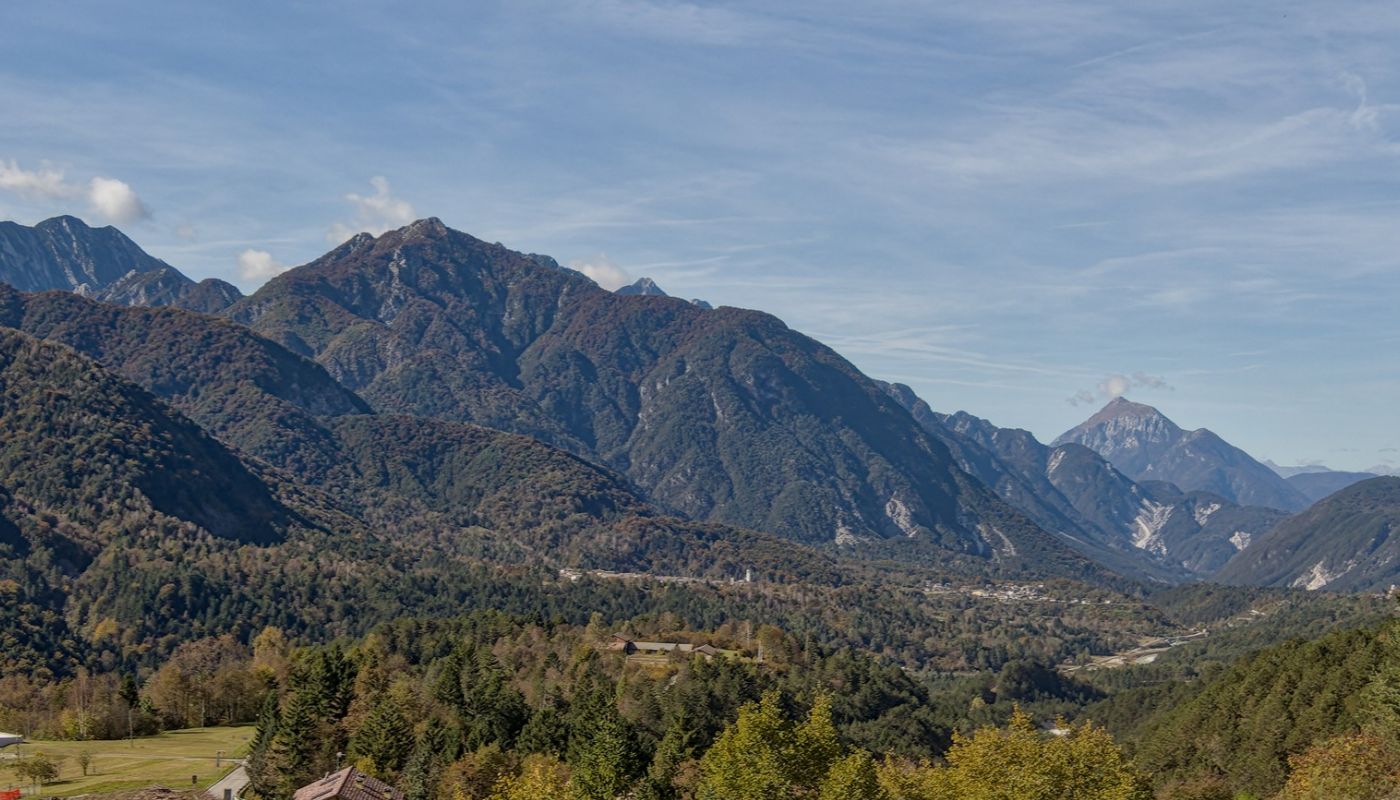
I spent my childhood years in the Nedica Valleys, actually in the Rečan Valley, in a small village that had nothing but houses and its inhabitants. No shops, inns… We spent our time playing through the streets of the village, at our neighbor’s who offered us some candy or ice cream in the summer, cycling to the river, playing with buttons that the villager carefully kept in a tin box. Every now and then we were scolded and we ran and hid so far away. Simple childhood days that shaped me and with which Veneto anchored itself deeply in me.
Then I moved with my family to Udine, but there I only had an official residence; there I fell asleep and woke up. However, my life certainly continued and took place in Veneto: first because of the Bilingual School, in Čedad for sports activities, then in Gorizia, Ljubljana and last but not least in Koper, before my return to my native Veneto.
I mentioned a memory that came back to me the day I listened to Recalcati’s words. Growing up, I remember well that my mother and I liked to listen to CDs while driving in the car, because yes, back then it was not yet possible to connect a USB stick, let alone a phone or today’s online music platforms.
In 2007, the CD Kekko Bergnach Unplugged was released, on which the music group Beneške Korenie, with the help of the Slovenian headquarters of RAI, recorded the most popular songs of the most popular Venetian musician Kekko Bergnach. After his death, this CD was released, and among the various songs, the song Every Time shakes me deeply, almost as if it pierced my heart every time.
And thou shalt not forget,
De in this valley thou wast born,De
all the flowers shall cry,
If thou wilt now Leave them.
Don’t forget your habits,
Don’t forget your tongue,
Don’t forget the green spruce,And
thenightingale
nightingale.
(Everybody, Kekko Bergnach)
It was and is one of the most popular CDs.
Let’s go back to memory. When I passed the driving test, I was at home in Udine, but I lived in Ljubljana. When I was returning home, I liked to sit in the car and drive to my Veneto, to my Rečan Valley. I didn’t visit anyone, I just drove to and around the valley. And of course, the CD was spinning in the car.
Why? Just so that I wouldn’t forget that I was born in that valley. To notice how things changed during my absence, how the seasons colored the houses and forests. I felt a great pain inside me because I knew I couldn’t stay there.
And if I think about those rides today, I felt how much I miss my valleys, my home land, my neighbors, my children, the elderly, the moments when someone stopped you on the road and asked, “Whose are you?”, the afternoons in the river, the rhythm of life that is purely human… I missed all of that because it was and is a part of me. And it was in that missing that I felt the same contraction of the body that someone can experience at the end or the problems of a relationship, or in the simplest understanding of love. I lived with all of this, but I knew I would come back, and so I did.
Veneto is a deserted place in the eyes of most, and it is often overly romanticized by outside observers.
Often, when I had visits from friends, the regular questions were: “Wow, how do you even drive on these narrow roads? How long do you have to drive to the first store? Don’t you feel lonely here, in this quiet space?”
At first, I saw such questions almost as an insult. Otherwise, their questions were perfectly legitimate, since there are only houses in the village and basic services are remote; you are surrounded by a neglected forest, where the roads are narrow and stones and trees fall on them, where telephone and internet connections are often dependent on the weather, where the houses around yours are closed and abandoned, where you may not meet anyone in the village during the day, where you do not have a garage in front of the house…
I was born in this environment and this environment raised me for life. I was raised by respect and dialogue with people, the silence of the village raised me to listen and understand myself, to listen to the stories of the elderly, which were at the same time the stories of all of us. It also raised me in understanding time or how to handle time correctly and qualitatively.
And yes, maybe my first love is Veneto: the Venetian soil, the melodies and accents of our Slovenian dialect, the voice of the elderly that no longer resonates in the village today, their faces full of wrinkles that testified to a life full of smiles and sacrifices, the wind that blows away the leaves, and the meadows that disappear from year to year.
Veneto probably doesn’t have a golden future ahead of it, but I know for sure that without it I wouldn’t exist and I wouldn’t be the woman I am today.