
GORIZIA, LAND CONSUMPTION AND BROWNFIELD AREAS
by AGOSTINO COLLA
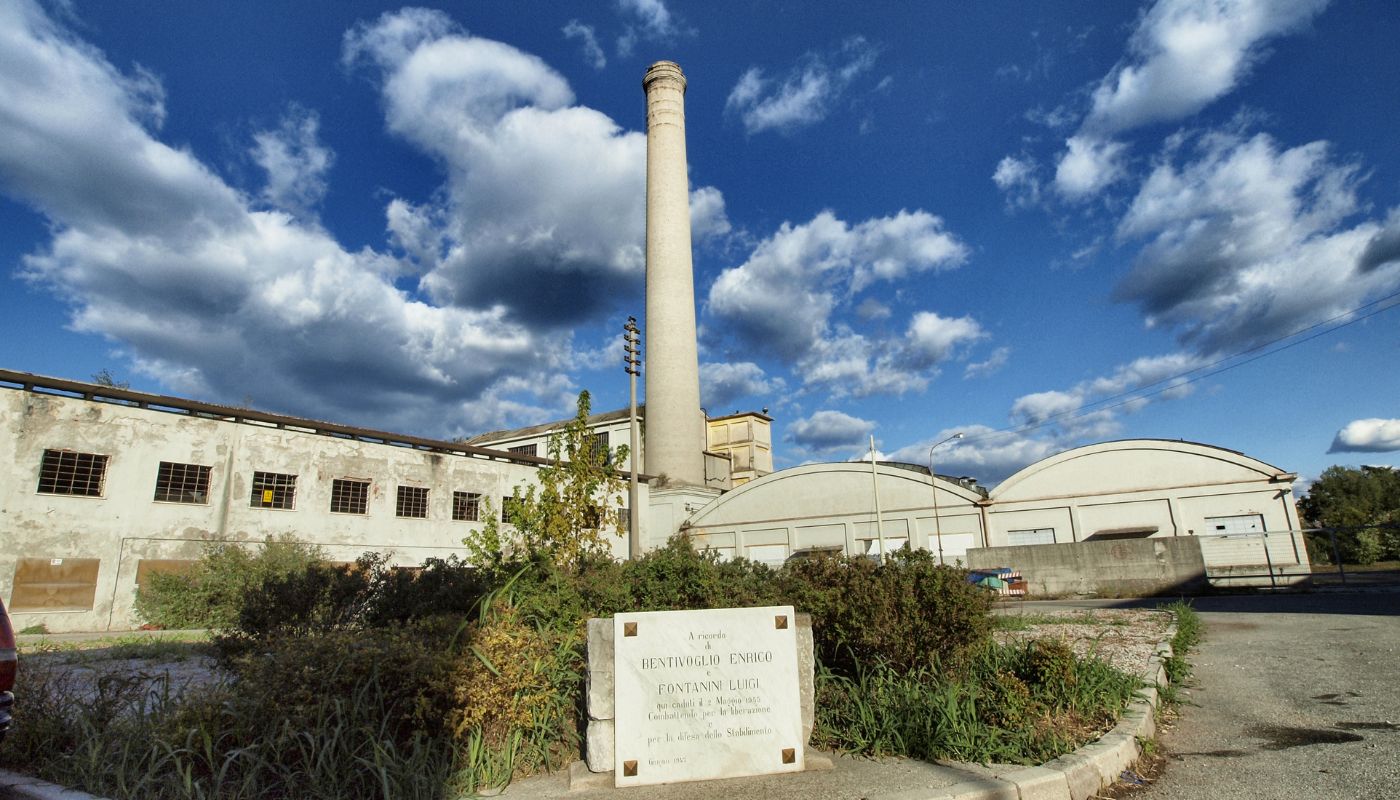
The wording of the title seems to be vague and relates elements that are perhaps distant from each other. The factors “land consumption” and “brownfields”, however, are also closely connected because they are a consistent part of the environment in which we live. The photos in the margin of this article describe this connection. An example for all to see is the industrial area of the former cotton mill and the buildings that once made it one of the few vital centers of our local economy. The current state is self-describable and the images tell the forgotten economy of our city and the degradation in which an area that is a symbol of so much work and so many struggles made to be able to defend it. I cannot go into the merits of the choices that have led to this state of affairs. Many other people have written in this magazine about the fate of the Trieste cotton mill, telling its history and the events related to it, but I would like to express myself on the state of things and on the nothing that has been or will ever be done to solve the issues inherent in the abandoned areas of our city.
The case of the cotton mill is the most evident. Other areas have and endure the same problems (barracks area, railway yard, military easements, disused barracks, etc.). The problems affecting the area are clear and evident to all the administrators who have succeeded one another at the helm of our city. The questions related only to the disposal of asbestos roofs, underground fuel tanks, or the intrinsic safety of the buildings themselves are well known but never seriously addressed . It could have been done even just by thinking about the long history of the cotton mill and how it has been linked to the economy of our city. This could also have been done by hypothesizing a reconversion of its area dedicating it to young people and their needs (meeting and aggregation places such as gyms, site for concerts, discos…). But none of this seems possible to do. However, degradation looms and projects languish despite having the master’s degree course of the Faculty of Architecture of the University of Trieste in the city, which could be the most suitable location to address such issues. In this specific case, and in all other cases, a competition of ideas could solve at the same time the issue of brownfield areas, their reconversion and the possibility of a revival in the construction economy, with a whole series of activities related to building renovations without these being dedicated only to new constructions and the consequent umpteenth consumption of land.
Gorizia, like many cities in our region, is evidently at the center of the phenomenon known as land consumption. In Friuli Venezia Giulia, this consumption records a very high value, placing the region at the top of the national rankings; Artificial areas increased by 3,783 hectares in the period 1990-2000 and by 1,255 hectares in 2000-2006, occupying mainly agricultural land and to a lesser extent wooded areas and semi-natural environments. (source: ARPA FVG). It is worth reflecting on the underlying definition, and clarifying the term soil and its natural use by man. “Soil is an essentially limited resource and, given the extremely long time it takes to form, it is not renewable. It is a very dynamic system, which performs numerous functions and provides essential services for human activities and the survival of ecosystems. Soil provides us with food, biomass and raw materials; it serves as a platform for carrying out human activities; It is an element of the landscape and cultural heritage and plays a fundamental role as a habitat. Many substances are stored, filtered and transformed in the soil, including water, nutrients and carbon: in fact, with the 1500 gigatons of carbon it stores, it is the main repository on the planet” (dr. Paola Giacomich, ARPA FVG, Management, centralized activities of regional importance).
In this regard, it is good to recall the Community objectives and guidelines that our State will have to follow up in the near future: “At the end of 2021, the European Commission approved the new EU Soil Strategy for 2030 to reaffirm that soil health is essential to achieve the climate and biodiversity objectives of the European Green Deal. The strategy sets out a framework and concrete measures to protect and restore soils and ensure that they are used sustainably. It sets a vision and targets for healthy soils by 2050, with concrete actions by 2030. The Commission, with the approval of the Strategy, also committed to approving a new law on soil health by 2023 to ensure a level playing field and a high level of environmental and health protection. At the national level, the Ecological Transition Plan (ETP) has set the goal of reaching zero net consumption by 2030, i.e. anticipating the European target by twenty years and aligning itself with the date set by the Global Agenda for Sustainable Development. The zeroing of land consumption, according to the PTE, will have to take place both by minimizing artificial interventions and by increasing the natural restoration of the most compromised areas, such as urban areas and coasts and is also considered a key measure for adaptation to climate change, to be regulated through a special national law, as already referred to by the National Recovery and Resilience Plan (PNRR).
The “zero land consumption” or “zero balance” is the strategic objective of limiting net land consumption to zero by 2050, favoring urban regeneration over new buildings. It does not imply the absolute blockade of construction, but requires that any new waterproofing be compensated by a de-sealing and restoration of previously urbanized areas.
Key aspects of zero land consumption:
Definition: It is based on the concept of a “net balance”, measuring the difference between consumed (waterproofed) and restored soil.
Main strategy: Urban Regeneration: Encourage the redevelopment, reuse and building replacement of existing ones, avoiding expansion into agricultural or natural areas.
Urban planning tools: Integration into regulatory plans of regulations that encourage the recovery, densification and reuse of abandoned buildings.
Goals and Deadlines: The European Union and national policies aim to achieve this goal, often defined by 2050, to preserve natural resources.
Regional legislation: Many Italian regions (e.g. Emilia-Romagna, Lombardy) have issued laws to contain land consumption, defining limits and incentives.
Land consumption, resulting from urbanization phenomena and the creation of infrastructures, leads to the waterproofing of the soils themselves, which irreversibly lose their physical and biological capacities. Soil undergoes a series of degradation processes and threats, caused or exacerbated by human activities, i.e. by the way in which it is used. Agricultural and forestry practices, transport, industrial activities, tourism, urban and industrial sprawl and building works alter the natural state and functions of the soil, as they lead to a change in the cover or an intensification of its use. All these aspects are heavily modified by its covering with materials that prevent its exchange with the outside: covering a soil for a long period with waterproofing material means killing the biotic component that composes it. In the absence of its ‘living’ part, only the mineral, dead, static part remains. Once the characteristics that make soil such a key element of ecosystems are missing, it is not possible to easily recover what has been lost. And therefore, from this point of view, extreme urbanizations such as those that can be seen in via Brigata Re (left side of the SR 56 in the direction of Lucinico) and in via Brigata Trapani are not justified in the face of an asphyxiated real estate market and a constantly declining population. A gift only to the builders’ lobby in the building field, an operation of building speculation only? New houses for which buyers, when a historic center is emptying of its inhabitants? Historic center where the same buildings, now empty, will be the first to degrade without their legitimate occupants. Wouldn’t it be better to put our hands on them by preventing a social and economic impoverishment of the same areas of the center? A whole long series of questions that are asked for answers by a serious administration.
La lingua originale di questo articolo è l'Italiano.