
MY BOSNIA TODAY
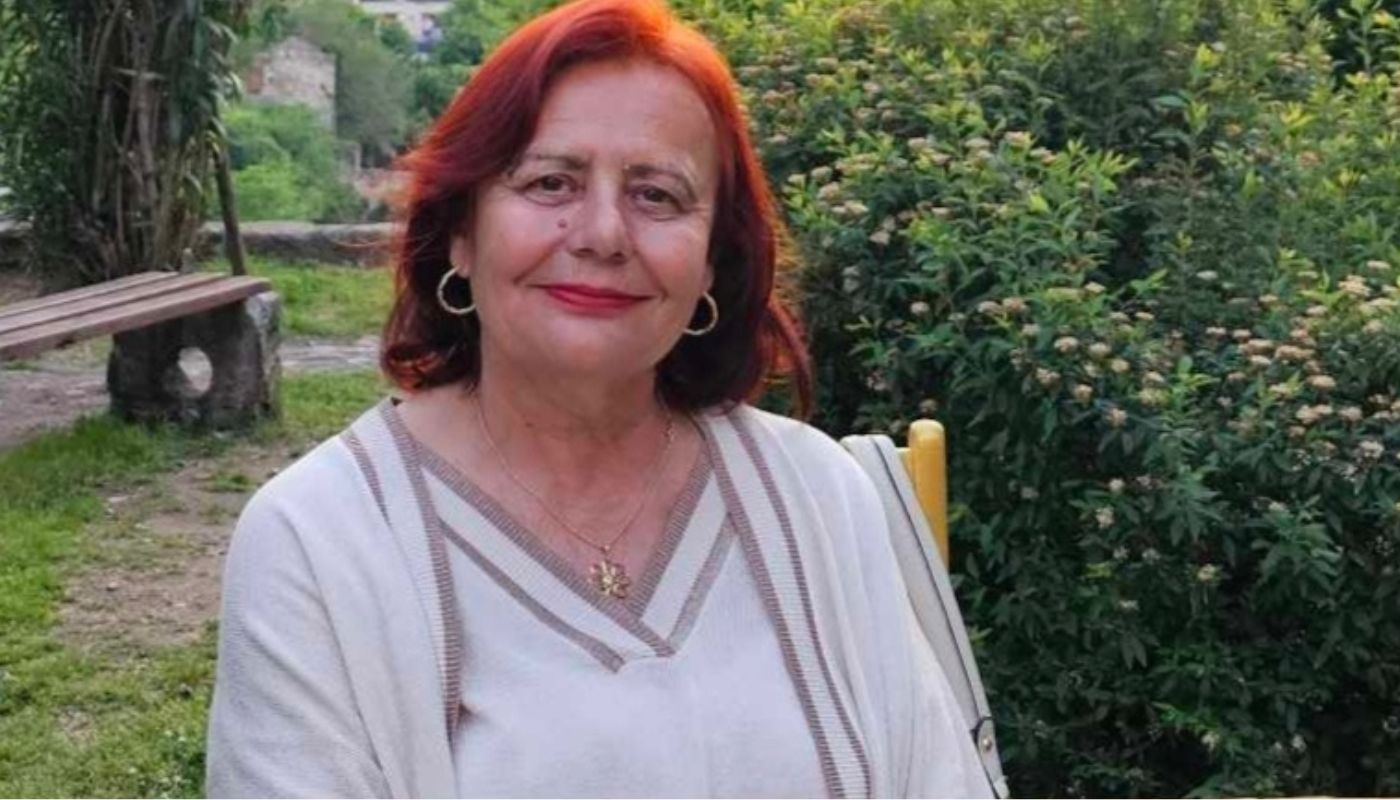
by ENISA BUKVIĆ
When Yugoslavia was destroyed, I realized that with that dramatic act my identity had also been erased. Living in Italy I felt much more Yugoslav being outside my country. I painfully experienced tragic moments and fortunately I realized that writing helped me to feel better. In 2008 my first book “Our journey” was born, through which I recovered a new identity.
After a long and hard work, I was able to carry out my analysis process and understand that the foundations of my identity are made up of elements coming from both Muslim culture and Catholic and Orthodox culture, having relatives of these religions and having grown up and lived in a culturally mixed area. I can define myself as a Bosnian with her own multicultural identity, which has also acquired many influences from Italian culture, to which I am attached. Writing the books and articles helped me to better understand this process.
I have always been driven by the desire to do something positive for my country and my people. I have provided assistance to refugees from Bosnia and Herzegovina and other areas of the former Yugoslavia who have arrived in Italy. Even during the conflict, I traveled home from Italy together with representatives of Italian NGOs to develop projects; we subsequently obtained funding and successfully implemented them in Gornji Rahić, Maoča, Gradačac, Gračanica and Tuzla, and later in Istočni Doboj and Brčko. I also organized international conferences and cultural initiatives focused on the Balkans in Italy, with a particular focus on Bosnia and Herzegovina.
At some point, after spending thirty years of my life in Italy, I decided to return to Bosnia and Herzegovina to transfer my knowledge and experience and further strengthen the bond between my country and Italy. I worked mainly in the field of culture and international cooperation. From the beginning, I encountered obstacles, as multiculturalism has always been at the heart of my ideas and projects. I tried to follow my own path and overcome every difficulty; I did not always succeed and, at times, I lost my optimism due to the frequent negative experiences.
Nationalism is a profound evil; in reality, it is hatred manifested towards the other, towards those who are different. In Bosnia and Herzegovina, nationalists have succeeded in transforming a culturally rich society into a system based on so-called “constituent peoples” — Serbs, Croats and, later, Bosniaks — a division that was later crystallized (sealed) by the Dayton Accords. They divided us to allow politicians to more easily manipulate our differences, although diversity had almost always been the norm here. Massive propaganda played a key role, allowing politicians to effectively exploit these divisions during the conflict, in the period that followed, and in the more than thirty years since then; as a result, this evil — nationalism — became the guiding principle of their actions. It is election year, and propaganda-fueled rhetoric is rampant: all in the name of the same, old-fashioned strategy of “divide and rule.”
Unfortunately, many people in Bosnia and Herzegovina are blinded by nationalism and do not realize that politicians are destroying the country – plundering it, selling off resources and fueling rampant corruption – while at the same time continuously undermining multiculturalism, what remains of the industrial sector and agriculture. The population is shrinking year by year as it ages and disappears, while young people migrate abroad. Today, more than 60% of the population lives outside Bosnia and Herzegovina’s borders.
In the context of the tragic and grim reality of Bosnia and Herzegovina, the diaspora has proven to be a vital resource for the motherland. Its members provide financial support to family members and invest part of their savings, preserving – and indeed enriching – their multicultural identity; they are becoming true cosmopolitans, marrying people from the various countries in which they reside, scattered all over the world. At the same time, they preserve and cultivate their own language and culture. This was particularly evident during this year’s World Cup, as most of the players in the Bosnian national team came from the diaspora. Similarly, a large proportion of the fans following the team belonged to the diaspora, particularly those residing in the United States. Before and after the matches, Bosnian coffee prepared in a Guinness World Record “džezva” (traditional coffee maker) was served; the object had traveled from Visoko to St. Louis, in the USA, where the “Dragons – Zmajevi” played the last friendly match before the start of the World Cup.
This impressive artifact was made in June 2024; it is 124 centimeters high, 95 centimeters wide and has a capacity that can serve up to 8,000 cups of coffee. The “džezva” accompanied the Bosnian national team in all World Cup matches. During the matches, fans sang traditional Bosnian songs “sevdalinke”, united in support of the team and free from any nationalist rhetoric.
The positive atmosphere during the matches restored my optimism; I will therefore continue my commitment by writing and publishing books and articles, often highlighting our multiculturalism, which represents our most precious asset. I will also continue to promote the ties between Italy and Bosnia – as well as with our diaspora – through culture and international cooperation.
Biography
Enisa Bukvić was born in Bijelo Polje (former Yugoslavia). From the age of two, she lived in Brčko, where she attended primary and secondary school. She graduated from the Faculty of Agriculture in Sarajevo and completed postgraduate studies in food science at the University “La Sapienza” in Rome.
After graduating, she worked in the Yugoslav and Italian food industry. Her work experience in Italy is related to research, training and international cooperation with non-governmental and international organizations. She is very active in working with the Bosnian-Herzegovina diaspora, both through initiatives in Italy and globally. She writes and publishes books in Italian and Bosnian. She has lived in Rome since 1987. She spends a lot of time in Mostar.
She is a member of the Bosnian Association of Writers, Translators and Librarians of Scandinavia. She was one of the organizers of the First Literary Festival “Woman with Book” and the first president of the Association of Women Writers and Art Lovers “Woman with Book” based in Mostar (Bosnia and Herzegovina).
He received the award of the Radio Federation of Bosnia and Herzegovina for cultivating the literary and poetic expression and quality of Bosnian poetry and for promoting it outside Bosnia and Herzegovina.
He has published 4 books in Italian and 5 in Bosnian.
His prose and poems are present in several Bosnian anthologies and in some Italian ones.