
WHEN ART LOOKS BACK
by KATARINA VISINTIN
There is something strangely intimate about encountering a work of art. It is that moment when we stop in front of a painting, a statue or an installation and something moves within us. Art has always been a silent dialogue between the creator and the viewer, but the way in which an individual enters into this conversation has changed dramatically over time. For a long time, art seemed to clearly communicate what we should feel. Altarpieces in churches inspired devotion, awe and hope. Few people really asked themselves: “What does this mean?” The meaning was mostly unambiguous, almost commanding, and the emotion accordingly. Today, we enter a museum and may find ourselves in front of an empty space, a pile of carefully arranged waste, an incomprehensible video, or an unusual installation, and our first, honest thought is often: “Is this really art?” This is perhaps where one of the key differences is revealed: art once welcomed us and led us by the hand, but today it often challenges us and leaves us alone in front of a puzzle, open to a space of numerous interpretations.
Let us think of a time when art had a clearly defined function. A portrait of a ruler was supposed to inspire respect and obedience, an image of Mary, emotion. Beauty was understood as objective and standardized, certain proportions, colors, and compositions were considered correct. The greatest artist was the one who imitated reality with astonishing fidelity, to the point that we forgot that we were looking at just color on canvas. Then something broke, or perhaps opened. Artists no longer painted only what they saw, but also what they felt. They stopped bothering with anatomical precision or color authenticity. They began to transfer screams, laughter, and pain to the canvas. Art became more personal and visceral.
But we, the viewers, found ourselves somewhat disarmed. Accustomed to beauty presented in a finished form, we were left standing before works that seemed unfinished, provocative, or even ugly. “I could do that too” has become almost a refrain in contemporary art museums. And perhaps there is a grain of truth in this; technically, many of us could have painted a black square on a white canvas. And yet we did not. When we stand before Malevich’s Black Square in 1915, we are not looking at a mere geometric form, but at a radical gesture that forever changed the understanding of painting. That is precisely the difference.
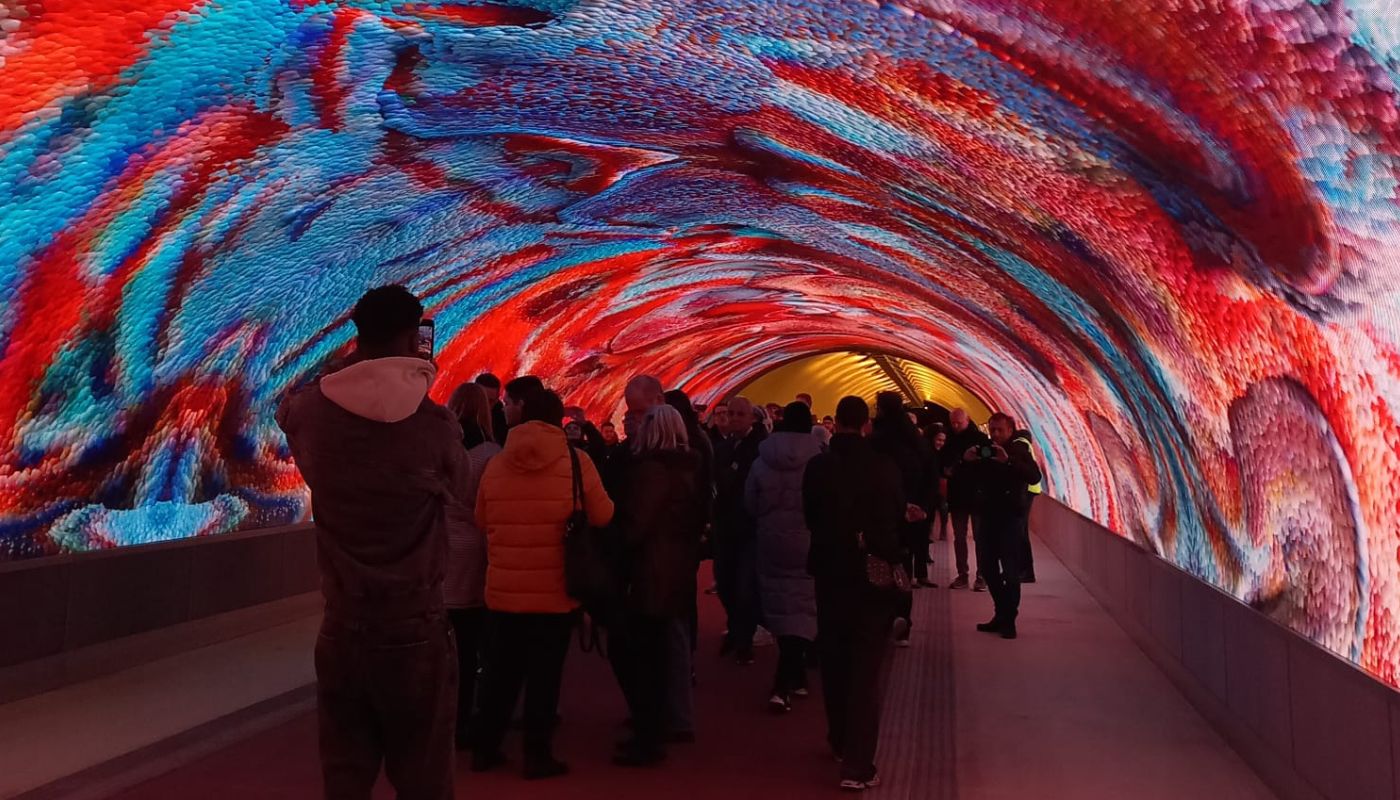
We live in a time of artistic pluralism that would have been almost unimaginable to previous generations. Art can be a fleeting performance, a monumental installation through which the viewer must physically move, a video, an algorithm that creates images without the touch of a human hand, or graffiti that appeared overnight on a city wall. The perception of art has become distinctly democratic: anyone can publish their creations online, reach an audience on the other side of the world, and declare themselves an artist without needing the approval of an academy or gallery. But this almost dizzying freedom raises questions that do not leave us indifferent. If everything can be art, what else separates a work of art from a non-art work? Who has the right to decide? The market with dizzying auctions, where a painting is worth as much as a house? Critics in their symbolic ivory towers? The audience that measures success by likes on social media? Or cultural institutions with their committees and often opaque criteria?
This suggests another possibility: perhaps the problem is not in the art, but in our ability to see. Contemporary works often require more visual literacy, more patience, and a greater willingness to interpret than we are used to. The emotions that art evokes have also changed. Once upon a time, the dominant emotions were a sense of fascination with technical virtuosity and an experience of spiritual elevation, as well as the recognition of stories that belonged to a common cultural horizon. Today, art often generates confusion, unrest, or existential questions without clear answers. It can deliberately make us uncomfortable, make us laugh at the wrong moment, or remain completely incomprehensible. Perhaps this is precisely its contemporary power: it no longer offers certainty or easy consolation, but invites us into a space of doubt. Therefore, contemporary art demands more from us than just admiration; it demands our presence. We must bring our own experiences, fears, and longings to the encounter with the work. An installation about loneliness will speak differently to someone living alone in a big city than to someone surrounded by family on a daily basis. And it is precisely in this openness that its legitimacy lies.
There is something deeply democratic about this, but also exciting. We must embrace uncertainty, persist in the discomfort of misunderstanding, or, even more challenging, accept the possibility of recognizing in the work a meaning that the artist may never have intended. Contemporary art does not give us answers; it asks us questions, some of which may remain open forever.
Through all the epochs and aesthetic upheavals, however, the fundamental human need remains unchanged: to create and to seek meaning in what is created. From cave paintings to works generated today by artificial intelligence, art remains an attempt to give form to the invisible, to say the ineffable, and to leave behind a trace that silently communicates: I existed, I felt, I thought, I imagined. In this constant field of tension between the work and the viewer, between tradition and innovation, between what was and what is yet to be created, art continues to live, transform, expand, and reinvent itself. It still excites, surprises, and moves us. It still asks us who we are and what we really feel. Perhaps this is precisely its greatest power: it does not leave us indifferent. It does not allow us to remain uninvolved observers. It forces us to look within, even when we would rather look away. And that, in essence, has never changed.