
BORDERLY EMOTIONS
by ALDO RUPEL
They moved to the city with their families in their early youth, and grew up there. They belonged to the sacrificed generation and then to the generation of resistance, first in defense of their own nationality, then in the military, which gave hope for victory. Before the war, they were not emotionally attached to anyone, but during it, the advantages were of a social nature with various duties. He returned to the network of the occupier’s security forces. He served in the city center, lived in the north, she was an activist in the eastern quarter.
They never came into contact as part of their illegal work. They belonged to different networks and the conspiracy was strict. Then he was given the task of tracking her down. He carried out the task with a piece of cake in his pocket, because he was covering rather than revealing her movements. After a few weeks, he became attached to her, first mentally, then he decided and used a pretext to legitimize her on the road. It sparked and they began to meet. They took risks, because in the complicated and never-finished relationships of illegal intelligence work, at that crucial time, you never knew which car would have a pipe sticking out of it and a person would be dying on the asphalt a moment later.
Then came victory and freedom; they breathed and came to life. They made up for all the sacrifices they had made during the war. They recognized and understood the message of their bodies, in stillness and silence. They surrendered to the intertwining waves.
But behind the scenes of everyday life and destinies, interests of international proportions were at work. Former allies betrayed and became opponents, they allied with enemies. At the crossroads of different nations and social systems, this is a real explosive: what was previously safe became dangerous, what was just became unjust, what was certain became uncertain. Life too. In September 1947, there was propaganda and physical persecution of Slovenes with attacks on social headquarters and private property. There were fights, manhunts, raids on apartments and shops, offices, 30,000 books were burned at once. In the circumstances of “democracy” and the military administration of the Western Allies.
They waited for him after work and attacked him. He barely escaped across the demarcation line. They fired her from her job, she received threatening letters, and they attacked her home on the street towards Šempeter.
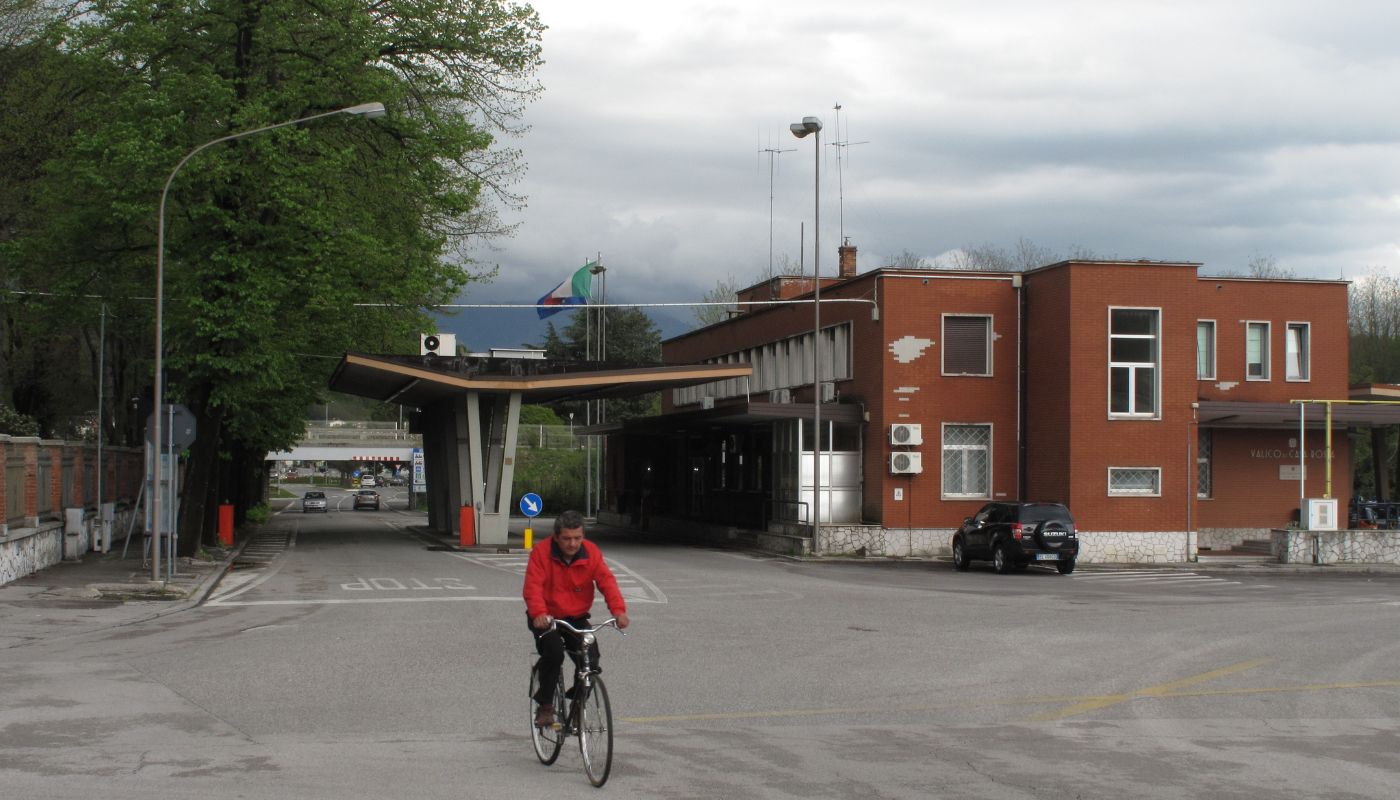
In two days, everything was over for them. They had previously suspected that they would one day say “YES”, but then the demarcation line closed hermetically, the intersection died down and the colder northern wind of the Cold War blew in. There were no documents for crossing. On this side, a numb city, on the other, meadows and rare homesteads to two larger settlements… and a railway line. With the forced separation, they could do nothing but mourn in silence. City Slovenes and those from the nearby hinterland came to the wires at a reasonable distance to greet each other and call messages about relatives or just wave. The countryside was left without an administrative, health, industrial and commercial center.
They also came and looked at each other silently, unable to console themselves even with the touch of their fingers, but during the budding of love, the feeling of being in love is very inventive. She made an agreement with a family who lived in a homestead right next to the railway and the barbed wire; in some places the border ran right into the gardens and courtyards. They arranged a date by mail: she would wait for him at the window of her friend’s bedroom, he would come to the window disguised as a railway inspector to exchange a few sentences without the presence of other people. They had no idea that they had begun to cross the demarcation line with some other small phenomena along the wire.
He mentioned to her that they were going to start building a new town in the meadows. He couldn’t go back to the “old”, but there was a chance that he could settle down in the “new”. Eventually, maybe she would move. It didn’t work out. Because of her illness and distant hospitalization, they hadn’t seen each other for a year and a half. Life went its own way. He had a different emotional connection, one without excitement, but acceptable.
When she returned from the convalescent home, the demarcation line had loosened somewhat, and residents on both sides were given some kind of permits; they were called passes. They allowed four crossings per month, which meant eight possibilities for the two of them. It is not known whether it was a coincidence or a domain: they only met once. The embers flared up again. They used all the knowledge from the time of the conspiracy to inform each other, meet and part ways in secret. The points of contact multiplied, because a new city, Nova Gorica, was being built next to Gorica. The places for meetings multiplied, which reduced the chance that anyone would notice them together more than once and think of a secret relationship. Their flames flickered until the first signs of serious degenerative diseases, until long hospitalizations, when they only corresponded. Living at a crossroads, straddling two cities, thwarted their original plans, but in its own way it allowed them a happiness that probably wouldn’t have been as lasting if they had lived under the same roof. Although such a concept is somewhat outdated, let’s still write that it was about two cities and one great emotion.
Prvotni jezik tega članka je slovenščina.