
WHAT DO WE MEAN WHEN WE SAY THAT MAN DWELLS, DWELLS?
written by KARLO NANUT
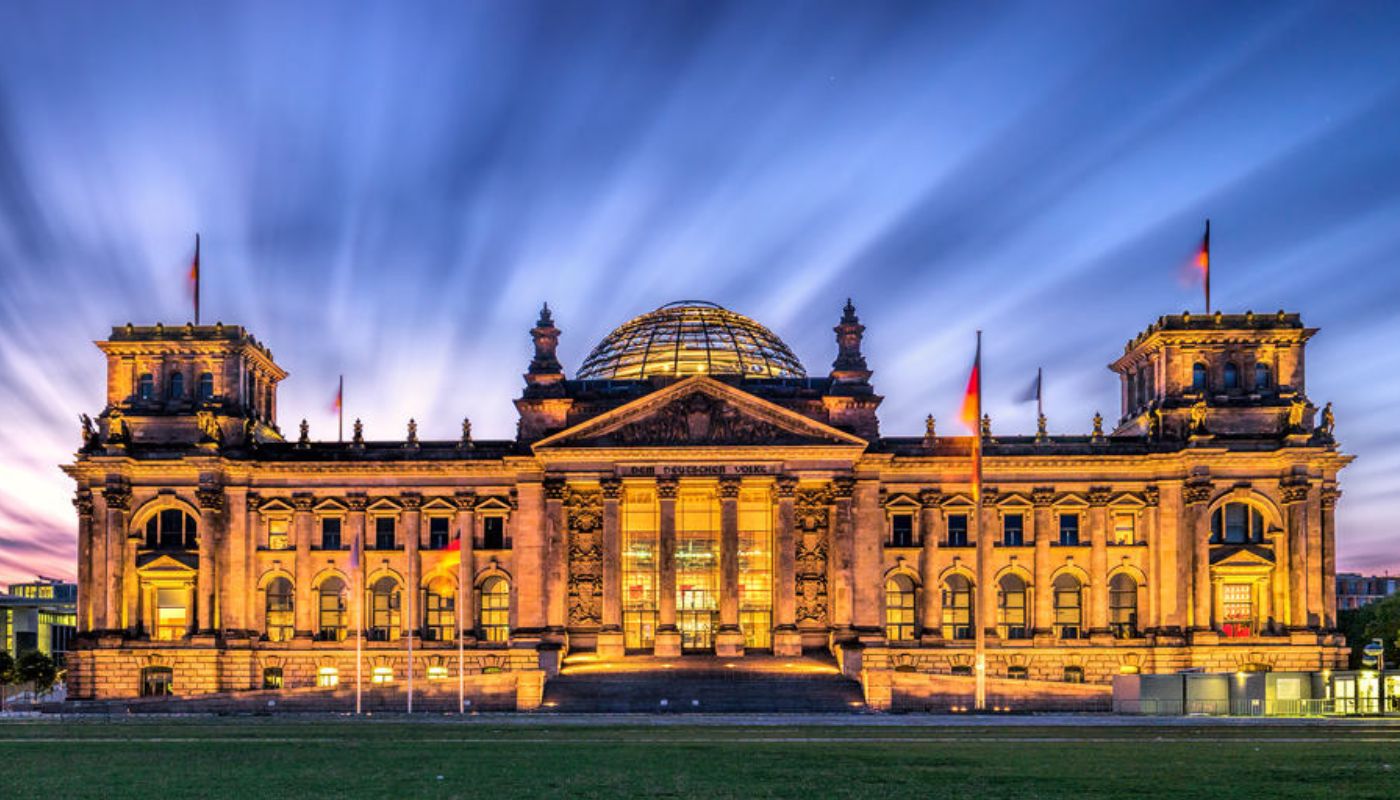
The basic things in a person’s life are simple, but they are not always easy to perceive. After World War II, the capital of the German Reich, Berlin, was completely destroyed, 90% of the buildings were demolished, they had to rebuild everything. They wondered how and where to start, as there were only ruins everywhere. Architects and engineers first called on the famous philosopher Martin Heidegger to explain to them what it actually means to live in a place, what we mean when we say that a person resides (in German: wohnt). Urban renewal cannot simply mean rebuilding a space. Rebuilding means restoring places of encounter, exchange and remembrance, it means rebuilding “habitat”, a habitat, of free and equal citizens.
Nowadays, it is imperative that different fields of knowledge work together. Philosophy, on the other hand, as a dynamic ontology, is more interested in the relations between them than in individuals, and views space as the realm of the future. In his works, Heidegger repeatedly returned to the theme of place, residence, and developed around these terms an extensive reflection on the deepest meaning of human existence and human nature. In an age when science and technology have already reached an enviable perfection of knowledge, we would expect and at the same time wish to achieve similar clarity in revealing man’s inner image, that is, his essence, his cultural and spiritual dimensions that he occupies in the world. To say that I am a human being, I have said very little.
Heidegger wondered about the deepest meaning of the phrase “ich bin” (I am). In ancient German, the verb “bauen” (to build, to build) also meant “to dwell, to be”, which is now expressed by the verb sein (to be) and which in the present is conjugated: “ich bin”, “du bist” (I am- I dwell, you are- dwelling). The way in which “you are” and “I am” in the world, the way in which “we humans are, we live on earth”, is “bauen”. At the same time, the verb also means to take care of the field and cultivate it (in German: den Acker bauen), to cultivate the vineyard. To be human, says Heidegger, means: to be on earth as a mortal; That means: to dwell. Heidegger’s great hypothesis, then, is: “I am” means “I dwell”, or also: “man exists as man because he dwells somewhere”; which means, among other things, that only man, as man, “dwells” in the true sense. Humans share many actions with other living beings: breathing, feeding, resting, getting angry, etc. But among all creatures, only man “dwells.” In this perspective, “dwelling” does not appear as the “one” among many human actions, but as the horizon that surrounds and regulates all human actions: every human action is, precisely because it is human, an expression or manifestation of “dwelling”. Man is also an “open being”, which means that he is “exposed” to otherness that cannot be assimilated; His way of being is an inevitable stimulus and a persistent reopening to something different, something that is different from himself but transcends him – this is also the primordial restlessness of the human condition.
Man is not a closed circle, he is one who is always open, who forces somewhere, he is always a changing being, always dynamic, not static. Where its spatial and temporal boundaries are, we do not know, we call it Homo viator (Latin term meaning traveller man). From this point of view, it is necessary to understand the assertion that there is something other than the distinctly human, the exclusively human, and as such it is a sign of his own “spirituality”: man is a spiritual being, because his way of being is open, wandering, “exposed”, from the very beginning in a movement towards the other than the other. Therefore, man exists and lives as a man only to the extent that he “dwells”. And if being is the way in which the self shapes the world, it is also true that the model of being in space that is proposed or imposed on us at the social level is not one that puts man at the center of space.
So what does the fact that the cities he creates have become alienated, that is, “non-places” that are designed only for rapid movement and rapid consumption, that cause suffering, and where individuals remain anonymous and isolated, tell us about man? The starting point for the definition of the concept of being is recorded in the Book of Genesis: God created the Garden of Eden and placed man in it to cultivate and care for it, to protect it. Two things at the same time: to cultivate and to protect, or to care for. But what does today’s society do? It certainly encourages cultivation, productivity, to protect, but it forgets about care. These places that cause suffering are buildings, but they are probably places where a single concern is present, consumerism that distorts space and organizes it according to its needs. In our consumer society, the desire to emulate the lifestyle currently recommended by the latest offers on the market is no longer associated with external pressure. On the contrary, we perceive this desire as another proof and expression of personal freedom, which does not follow from the truth. The real action that life requires, however, is that in addition to cultivating and building a new world, we must also be truly responsible for it.
Architecture can only function with dignity in reconstruction if it is placed on the side of life, on the side of memory and the dignity of all citizens. The real crisis of housing is not the lack of housing, but the fact that people have forgotten how to live “authentically, authentically”, that is, how to live “freely” on earth.
Prvotni jezik tega članka je slovenščina.