
A WOMAN BETWEEN TWO WORLDS
by ELIO CANDUSSI
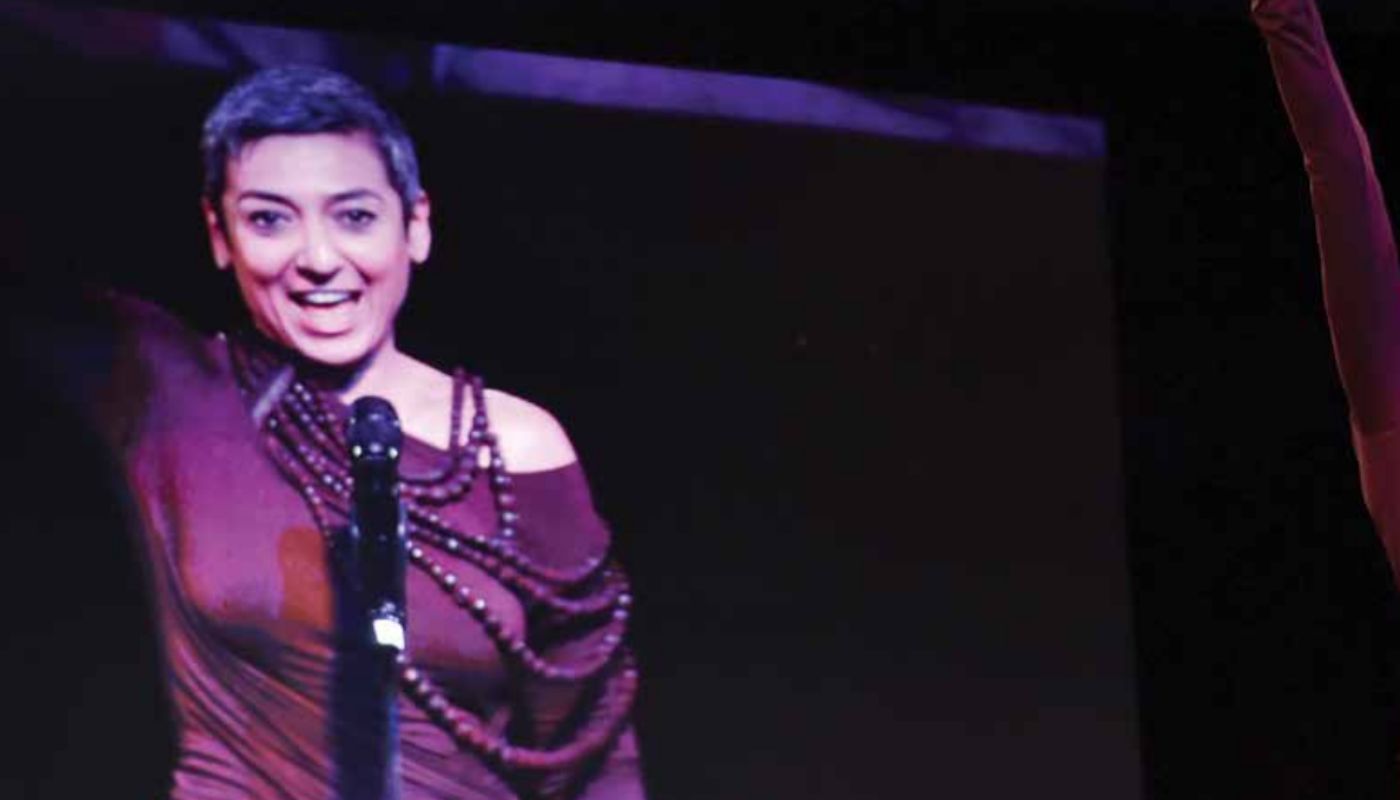
“A woman between two worlds – My life in the shadow of Saddam Hussein and my escape from tyranny” is the title of a book published in 2005, recommended to me by my daughter, who a few years ago in Venice had the opportunity to meet the author in person. She recommended it to me so that I could reflect on a particular aspect of the story, namely the drama of women who are victims of rape, of cruel sexual violence, not in the family, but in specific historical and war contexts. The volume is the biography of Zainab Salbi who, as a child, lived in the shadow of the dictator of Iraq in a privileged condition, unaware of Saddam’s cruelty and his sexual obsessions.
However, not even twenty years old, Zainab became aware of the situation and fled to the United States, where she began to rebuild a free and independent life and decided to devote herself to helping women victims of more or less “organized” rapes. It is known that, since the world has been the world, during wars the victorious army often allows its soldiers, as a “reward” for their courage and loyalty to the leader, to perpetrate raids against the vanquished, no longer only against the soldiers of the defeated army, but against innocent civilians; in addition to stealing food and valuables, setting fire to houses, soldiers can finally vent and rape all the women they casually meet. These events have taken place everywhere in the world and at all times, since the time of the rape of the Sabine women of Roman memory. It was and is “normal” that this happened. All this did not particularly strike me, because it is well-known and documented history, most of the time it took place far from my city and my world, for example in Iraq as in the book in question.
My sensitivity to organized rape changed when Zainab recounts reading an article in “Time about rape camps in Bosnia and Herzegovina and Croatia, where women were imprisoned and raped day and night, apparently by Serbian soldiers.” She went to those countries, met some of these raped women and decided to create a special foundation in their defense, called “Women for Women in Bosnia.”
We are talking about events from only a little more than thirty years ago, that is, from the years 1992-95, at the time of Slobodan Milošević. Zainab documents and states that the Serbian dictator organized “rape camps”, i.e. places where women of all ages were imprisoned, in order to systematically rape and humiliate them, so as to annihilate their personality. “These were not informal bivouacs in the forests; the Serbian army had occupied hotels, schools and public buildings for this purpose and continued to operate under the eyes of the whole world, practically undisturbed. It released victims when they were pregnant, so that they could no longer abort their Serbian children”. The victorious soldiers did not rape on their own initiative, but on the contrary they were forced to rape, they were commanded to do so, as happens in war when you have to kill to survive. As a result, in some cases the soldiers did not feel like doing it, especially if the victim was too young, so they were, if all goes well, mocked by their fellow soldiers or, worse, punished by their superiors. The women were ashamed of the rape they suffered and kept quiet so as not to discredit their families. It was in all respects a planned war strategy, worse than ethnic cleansing, because it aimed to terrorize and destroy entire families and social groups.
Honestly, I must say that I knew nothing about it, despite the fact that these events had happened a few hundred kilometers from my home, in a time so close and in a scientifically organized way, much more cynical than the rapes of past history. These events seemed impossible, unreal, naively I did not believe that it was possible to reach such levels of cruelty and coldness. I decided to do some research on the internet, which is much easier today. It was enough to visit the wikipedia site under the heading “rape camps” to read in detail their use as a tool of psychological warfare, enriched by the story of historical episodes, from the most ancient times, up to the rapes of 1992-95 in Bosnia and Herzegovina. According to the estimates of the International Criminal Tribunal for the former Yugoslavia, we are talking about a number of 20 to 50 thousand victims, mostly Muslim women. So Zainab’s testimony and story seems confirmed!
More than 30 years have passed and I wonder: who was guilty of these crimes or was an accomplice more or less aware of them as they live today, has been tried and convicted? What about the women who survived, now they may be 50-60 years old, have they managed to rebuild a new life somewhere in the world or have they remained anchored to the patriarchal family of origin, keeping the secret about the paternity of the child they gave birth?
But the most distressing question concerns the children born as a result of rape, who will now be 30-35 years old.
Some will have been killed by their mother at birth out of shame, others will have been abandoned in an orphanage and then adopted, many others will probably have remained with their mother, in Bosnia or emigrated far away. But the drama will have exploded when, as an adult, the “son of rape” will have learned the harsh truth either from his mother or from third parties who may have wanted to hurt him, today he will be living a double identity, the initial one as an innocent child and then that of an adult in crisis. Will he be able to rebuild a “normal” life or will he have to emigrate far from Bosnia, as several women have done to rebuild their lives? What relationship will he have with his biological mother and with his adoptive mother? Of rejection or understanding? Will he have gone in search of his biological father? Each case will be a story in itself, but still a dramatic story.
It doesn’t matter how many “children of rape” there are, it is estimated to be a few thousand or tens of thousands, depending on the interests of the parties in exaggerating in one sense or another, but we will never know and in the end it is of little importance. In reality, on the web you can find several stories, all personal testimonies, told by women who have suffered violence or by children of rape once they become adults, stories that the world prefers to forget or hide in a drawer or in a trunk in the attic. The curious reader has the task of investigating.
These are questions I cannot answer, but has anyone cared for these victims? Or has the Western world, as usual, turned the other way?
In the end, I just have to thank Zainab for opening a window on the horrors of this world so near and so far. See: https://www.womenforwomen.org/, now “Women for Women International.”