by LORELLA KLUN
Marko Vogrič recently presented the exhibition “20 of 65” at Galerija 75, the exhibition hall of Fotoklub Skupina 75 in San Floriano del Collio, which brings together around forty works created over the last two decades of activity.
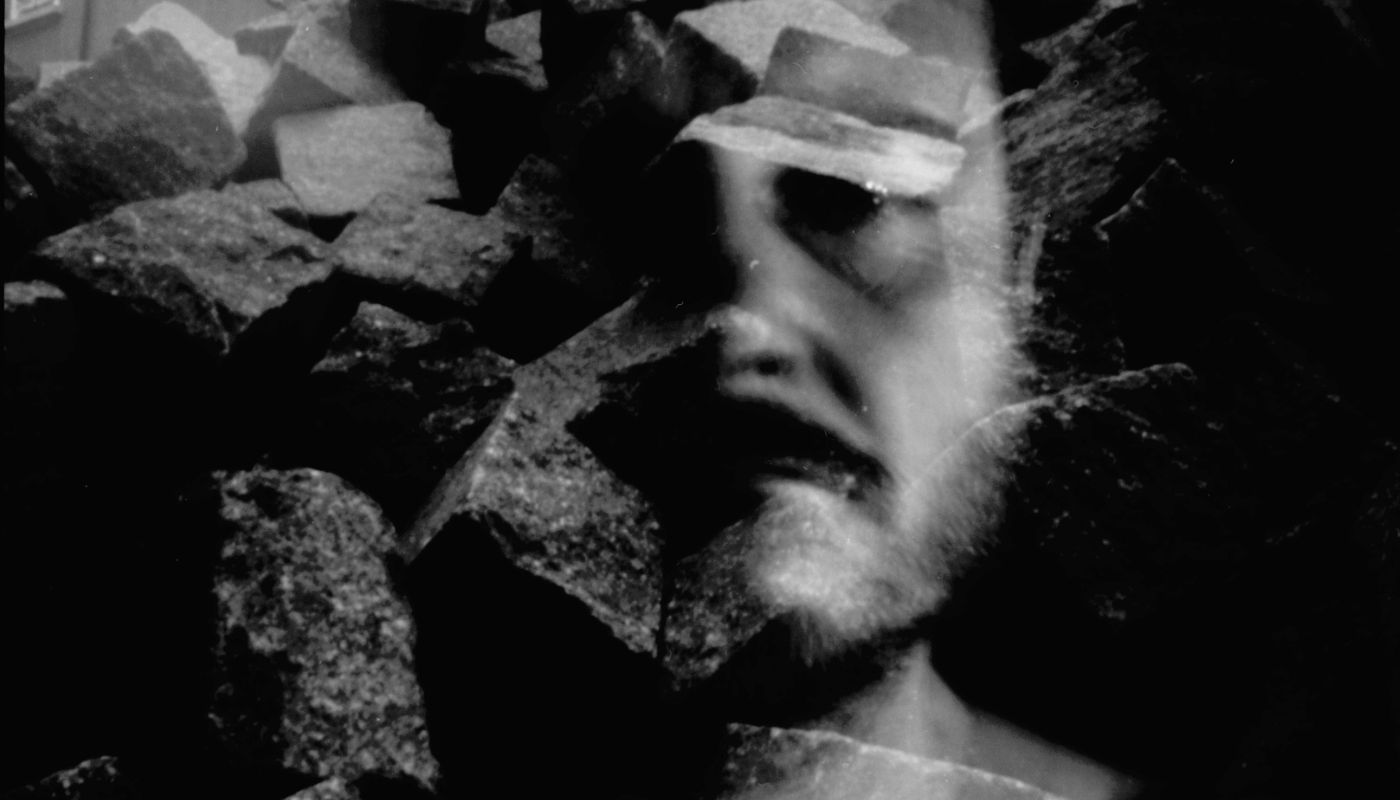
The exhibition selection focused on the artist’s unique perspective, which explores both unusual urban perspectives and natural elements, capturing the breath of the fields and the earth and enclosing it in dreamlike visions.
From his self-portrait, natural constellations, interweavings, and branches emerge, captivating the viewer thanks also to the visions obtained through the use of a pinhole camera, a device without a lens but equipped with a tiny hole through which light enters and imprints the image on the internal support; this simple equipment, with its peculiarities and long exposure times, represents the ideal medium for enhancing the philosophy of slow photography.
From visionary glimpses of nature, the journey leads us to the series “The Day After,” in which images of a coastline after a storm become a bitter metaphor for reflecting on the fragility of our ecosystems. The small toy robot, washed ashore and lost amidst a ruined landscape, seems like an alien silently and helplessly observing the consequences of unrestrained human development.
Reflections and questions about the often conflictual relationships between Man and Nature continue in “Mechanobotanica,” a surreal series in which an old workbench hosts unexpected combinations of flowers that, with their delicate vulnerability, submit to the intervention of rasps, drills, and saws.
The modest mechanical workshop then transforms into a disturbing laboratory, where the gap between academic science and fringe science becomes increasingly blurred; frame after frame, a new herbarium comes to life, opening up to the “uncanny,” that sensation that pulsates when something usually familiar takes on different and unexpected connotations.
The perceptual disorientation is further fueled by the novel names with Latin assonances that the author assigns to the flowers: “Gerbera Jamesonii Planata”, “Helianthus Frankensteinii”, “Lilium Candidum Secatum”.
The other series presented, perhaps the most iconic, is “A mouse in…”, which, again thanks to the use of a pinhole camera , transforms the author into a modern flâneur.. From familiar places – Gorizia, Nova Gorica – the research extends to other cities such as Rome, Vienna, Ljubljana, London, Paris; the particular glimpses and sweeping panoramas wisely distance themselves from the glossy and artificial shots of certain types of photography, to lead us into a rarefied dimension, magically suspended in time.
Marco Vogrič absorbed and elaborated the poetics of Eugène Atget, with the views later loved by Breton and Man Ray, those that contrasted with the pompous and celebrated images of a monumental Grande Ville and which instead favored apparently anonymous glimpses, secondary streets and small shops. From the Surrealists Vogric also seems to have embraced the theory of‘Informe, which was used for ““downgrading” artistic categories, both through the search for subjects “less noble”, or not deemed worthy of attention, either by reversing the compositional coordinates: his shooting point is radically lowered to the level of the road surface, so that the manhole covers, with their cast iron bas-reliefs or the time-worn stone, conquer the foreground.
The exhibition concludes with “Wunderkeller,” a small installation showcasing Vogrič’s versatility and passion for experimentation. Each face of the solid, both internal and external, recreates the walls, floor, and ceiling of a cellar filled with objects, a profound tribute to his father and his photographic work, but also—who knows—a possible further creative and operational direction for the artist.